
Introduction
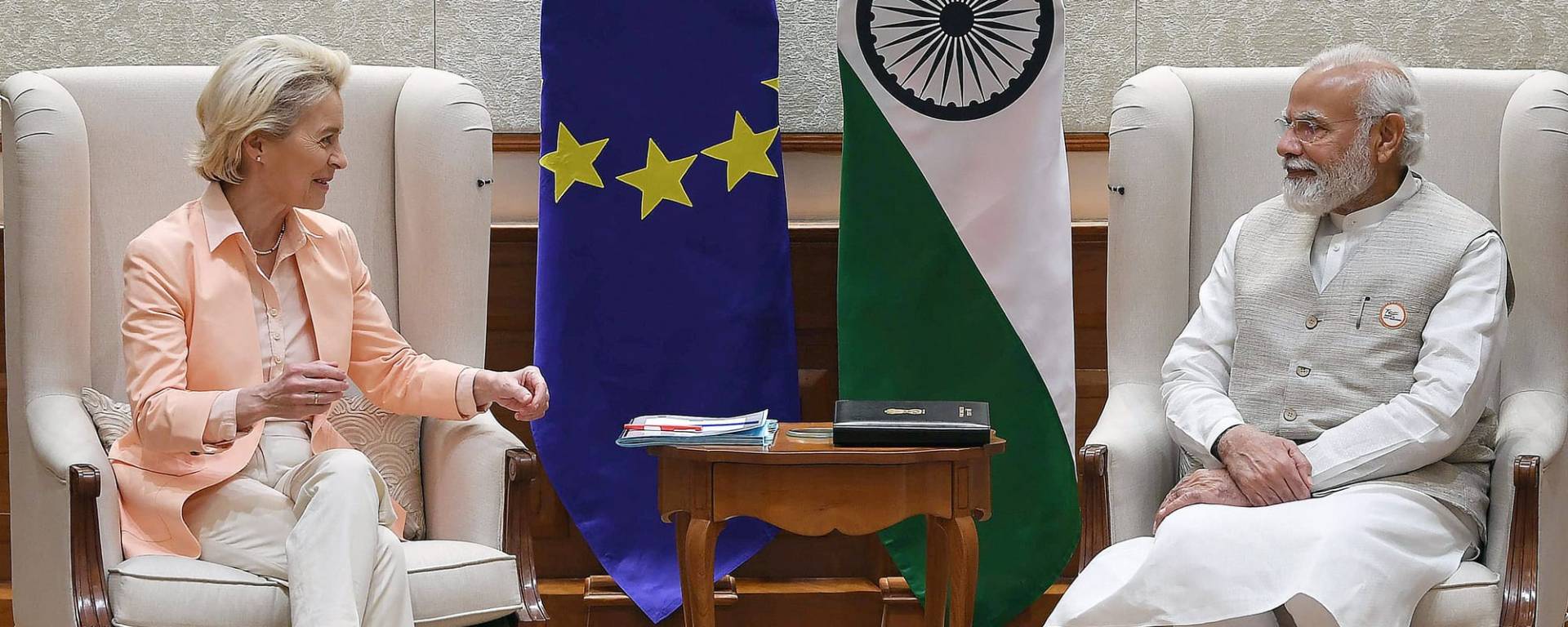
Recently, India and the EU (hereinafter ‘the nations’) restarted negotiations for a bilateral Free Trade Agreement (FTA) in 2022 after the talks had been discontinued in 2013. The objective is to have a streamlined and enhanced trade between the two nations. The FTA will give effect to a comprehensive agreement addressing various concerns for the parties including trade of goods and services, investments, etc.
Free Trade Agreements (FTAs) are provided for under Article 24 of the General Agreement on Trade and Tariffs. FTAs do not have a common system for dispute settlement that is used in all such agreements. This is because these agreements are independent from the World Trade Organisation (WTO) system which uses the Dispute Settlement Understanding for settling disputes. This independence comes from the fundamental characteristic of any FTA which is to give a “WTO-plus” liberalisation. It provides access to markets beyond the level that the WTO system provides. Therefore, this access and the disputes arising from it must be addressed separately in the FTAs.
The fourth round of the EU-India FTA talks discussed the construction of provisions under the dispute settlement chapter regarding the panel process and functioning, as well as its transparency. Arbitration panels are independent bodies or tribunals established to resolve disputes resulting from any misunderstanding or application of the provisions within the FTA. These panels generally come into the picture when the consultation process does not give relief to the complaining party. Panels are categorised under the quasi-adjudicative model of dispute settlement, combining political (e.g., negotiation, mediation and conciliation) and adjudicative (with a binding legal authority) methods, such as panel systems chosen by parties.
The EU has proposed a different mechanism for appointing panellists to arbitration panels than the one India has used in its FTA with the UAE. In this piece, I argue that the new FTA proposal by the EU has the potential to save time and create an effective dispute settlement mechanism. The article first gives an understanding of the proposal given by the EU regarding the appointment of panellists. It then proceeds with a comparison to the procedure for such appointments in the India-UAE FTA. Finally, the article presents an analysis of the advantages and effectiveness of the EU’s proposal.
Understanding the EU’s Proposal for the Appointment of Panelists
The proposed mechanism draws a parallel to the EU’s other FTAs such as the EU-Canada Comprehensive Economic and Trade Partnership. The mechanism calls for a “roster system” wherein a list of 15 persons who are willing and qualified to perform as a panellist is created. In this list, there are three sub-lists; one each by both the parties and one of the individuals who are non-nationals of either party who shall serve as the chairperson of the panel.
The proposal states that a panel shall be of 3 panellists which are to be agreed upon by the parties. A panel must be constituted within 10 days from the date of the request for the constitution of a panel delivered by a party to the other. If this period expires, each party must select one panellist from the sub-lists, which the parties shall have created beforehand, within 5 days of such expiry. If a party does not select such a panellist, the co-chair (of an institutional body yet to be defined) shall select a panellist from the sub-list of that party by a draw of lots. If the parties disagree on the chairperson, within 10 days from the date of delivery of the request, the co-chair of the complaining party shall select such chairperson by a draw of lots within 5 days. The panel is automatically established after 15 days of the 3 selected panellists having accepted their appointment.
Panel Constitution under the India-UAE CEPA
The mechanism for the constitution of a panel under the India-UAE FTA is quite different from the one the EU has proposed. Although the general principles are the same, such as a panel of 3 and that they are not nationals of either party; it differs significantly in how the panel is constructed. The India-UAE FTA does not have a provision for a prerequisite list of possible panellists but rather works on a need-to-need basis. This provides for a subject-specific resolution of disputes where experts in the field are appointed.
When an appeal for the formation of a panel is made by either party under Article 15.8, a panel is established. Each party must appoint a panellist within 20 days from the date of formation of the panel. The third panellist, who shall serve as the chairperson of the panel, must be appointed by a mutual agreement between the parties within 40 days of the establishment of the panel. If either party is unsuccessful in appointing its respective panellist within the stipulated time, the other can ask for the Director General of the WTO to designate a panellist within 20 days from the date of request.
If no agreement is reached on the appointment of the chairperson, the parties shall take another 10 days to exchange a list of 3 nominees who shall not be nationals of either party. The chair shall then be selected by a draw of the lot in the next 10 days after the expiry of the 10 days taken to exchange the list of nominees. The draw of the lot shall be done by the joint committee established under Article 17.1 of the agreement. The date of panel composition shall be determined as the date on which the last of the 3 selected panellists notifies the Parties of their acceptance of the appointment.
Analysis of the Proposal and its Effectiveness
The EU had historically resorted to traditional diplomatic means or the WTO dispute settlement mechanism for the resolution of its disputes. However, there was dissatisfaction with such methods relating to effectiveness in successfully resolving the disputes. Additionally, there was a demand for reform by its trading partners. Under these circumstances, arbitration as a method was resorted to. This can be evidently seen from the EU-Chile FTA of 2003 wherein it established arbitration as the primary source of dispute settlement. Under the FTA, there was a roster of 15 arbitrators from which both parties could select their arbitrators and create a panel. This was the start of the EU’s attempts at refining the resolution process in its trade agreements.
The mechanism proposed by the EU in the EU-India FTA talks has a more comprehensive version of the above mode. This is because it addresses an additional concern apart from the timely resolution of disputes. The proposed mechanism ensures state sovereignty in the dispute by allowing parties to choose a panellist they believe will be equipped to understand their concerns at length. Under this model, the roster is kept as a backup in case the parties are unable to come up with names of panellists or disagree on the appointment of the chairperson. The roster is compulsorily maintained such that in the event of an impasse, parties are empowered to handpick panellists who precisely align with their objectives. This creates a system which balances state sovereignty with timely resolution. This consequently ensures that parties have faith in the dispute resolution system. This model has been prevalent in multiple Free Trade Agreements such as the United States-Mexico-Canada Agreement (USMCA), the Comprehensive and Progressive Agreement for Trans-Pacific Partnership (CPTPP), and Canada-Chile FTA among many more.
The “roster system” will always have a list of potential panellists ready in case a disagreement arises between the parties on deciding the panellists. This makes the system more time-efficient in terms of establishing a panel. The entire process becomes quicker such that the focus can be more on the quick and effective resolution of the dispute that has caused the panel to be constructed. The proposed mechanism by the EU takes 15 days in a ‘worse-case’ scenario to appoint all 3 of the panellists (subject to their acceptance).
On the other hand, the mechanism that India has been following aims to resolve disputes with expertise alone. The aim may be convincing but it results in a very long and cumbersome process and may defeat the purpose of a quasi-adjudicative settlement. Looking at the timeline of the procedure of appointment of panellists, it takes 60 days in a ‘worse-case’ scenario to appoint all the members of the panel (especially the chairperson). Moreover, there are no alternatives available if the parties are at an impasse. The resolution process can only start when either the parties select their panellists and agree on a chairperson, or with the involvement of a third party like the WTO Director General.
Creating a consensus on appointing panellists is not an easy task since both parties are in dispute and will aim to create a panel that can potentially be favourable to them. In such cases, the selection of panellists is less than likely to happen and the roster acts as a quick recourse to facilitate the quick resolution of disputes. Moreover, it still allows the states to have control over who the panellists in any particular dispute will be, and who they can choose from if disagreements arise over their primary choices.
Conclusion
The EU’s proposal attempts to create a balance between parties choosing panellists on a need-to-need basis specific to the situation at hand as well as the quick resolution of disputes. It has the potential to significantly reduce the time taken to settle disputes arising out of trade. India has taken a step towards entering into FTAs with its recent agreement with the UAE and can use this proposal by the EU to create more effective dispute settlement mechanisms under its future agreements.
Given that there is still some work left to be done on this new mechanism such as defining the institutional body, appointments of its co-chairs and how the body would be structured. Further negotiation rounds are needed to come up with a consensus on the structuring and adoption of this new mechanism.
Aditya Roy is a third-year law student at National Law University, Odisha.
Image Credits: Indian Press Information Bureau
 Jindal Forum for International and Economic Laws