
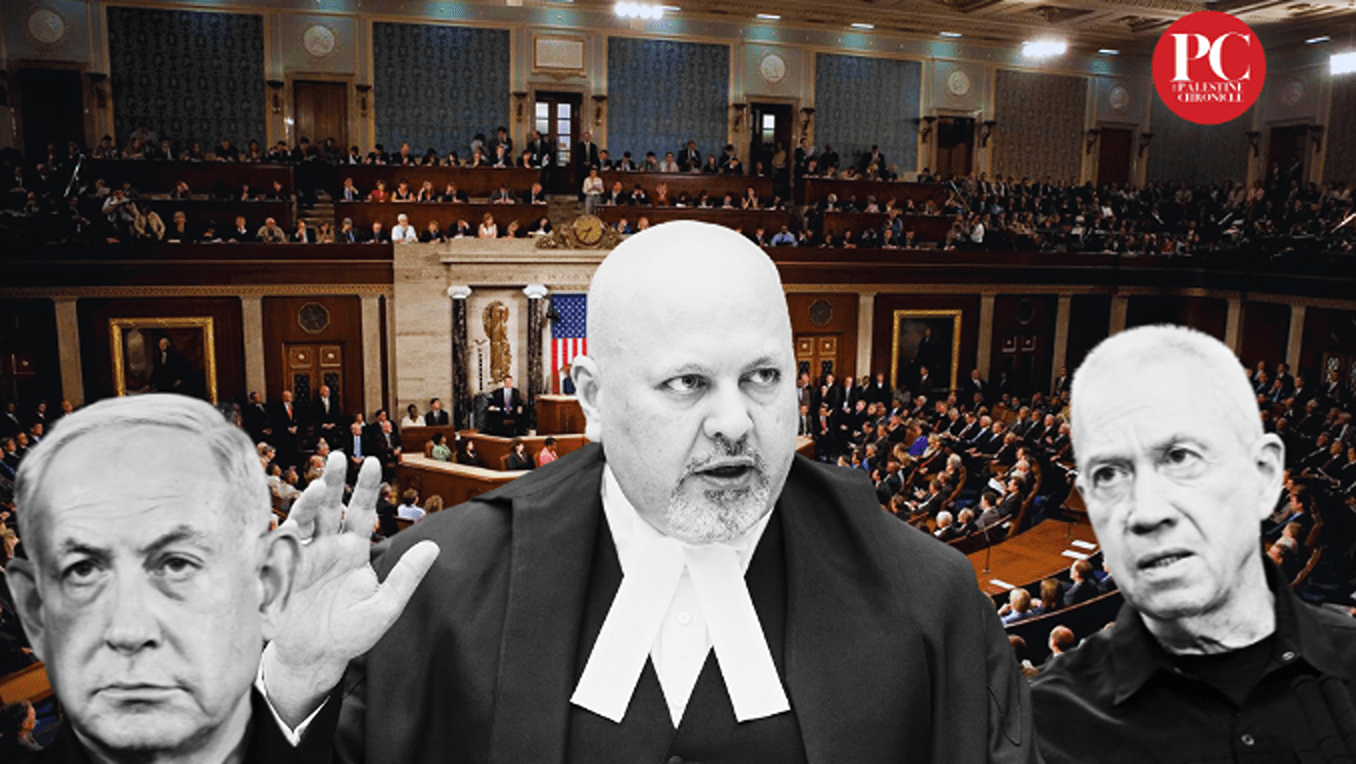
For the last seven months, the International Community has been maneuvering through multiple legal questions arising out of the armed conflict in Israel-Palestine. This long-standing strife dates back to 1948, marked by the establishment of the Israeli state, which Palestinians perceived as an encroachment on their land and identity. A key difference between the global order in 1948, when the Israel-Palestine conflict saw its beginnings, and today, is an established international legal order. In the contemporary era, multiple international legal courts and tribunals operate with a commitment to fostering global justice and ensuring accountability within their niche jurisdictions.
On May 20, 2023, Karim Khan, the Prosecutor of the International Criminal Court (ICC), sought arrest warrants from the court’s Pre-Trial Chamber for leaders on both sides, addressing the attacks from October 7 and the subsequent violence in Gaza. In light of the applications for warrants, this piece exclusively focuses on the ICC and theorises its role in addressing the ongoing conflict. We further reflect on the effectiveness of this forum by analysing previous arrest warrants issued. Additionally, it highlights strategic nuances and potential challenges that the ICC may encounter in exercising its jurisdiction over such a politically charged and complex issue.
Navigating the ICC’s Jurisdictional Jigsaw
As the newest of all international courts, the ICC was established in 2002 by the Rome Statute, the ICC gave the international community a novel opportunity to move beyond the confines of state responsibility required by the International Court of Justice (‘ICJ’) and regional human rights courts. One would argue that in a long-standing conflict like the one between Israel and Palestine, the ICJ’s opinions are yet to see much success in achieving enforceable justice. It is thus we believe that examining the role of the ICC allows the international community the opportunity to lift the veil of statehood and see for themselves, who in reality are the individuals responsible for these crimes.
Under Article 12 of the Rome Statute, the preliminary basis for the jurisdiction of the ICC is established when a state is a party to the statute or accepts the court’s jurisdiction via declaration. On 1 January 2015, the Government of Palestine lodged a declaration under Article 12(3) of the Rome Statute accepting the jurisdiction of the Court over alleged crimes committed “in the occupied Palestine territory, including East Jerusalem since June 13, 2014.” By doing so it acceded to the Rome Statute and became the 123rd state party to the ICC.
Under the jurisdictional scheme of the court, a situation can be investigated by the ICC only in one of three circumstances: first, if a state party refers the situation to the court; second, if the prosecutor of the ICC proprio motu takes note of a situation and gets the approval of the pre-trial chamber to investigate; or lastly, if the United Nations Security Council refers a situation to the court through a resolution. On 22 May 2018, Palestine referred the situation in Palestine for investigation. Since Israel is not a party to the Rome Statute, the jurisdiction of the court under Article 12(2) is limited to the territory of the state of Palestine and acts committed by its nationals.
Yet, in attributing individual responsibility, the paradox of the international legal order is ostensible. One cannot determine responsibility of an individual without first entering the question of statehood of the Palestinians for the purposes of an Article 12 declaration. Well aware of the consequences of their decision, the majority opinion clarified that they would not in fact be adjudicating the question of Palestinian statehood, for the larger purposes of international law, but rather, limiting their analysis to a mere determination of the meaning of state under Article 12(3) of the Rome Statute.
The Palestinian Predicament: A Tug of War for Statehood
While the Palestinian situation should ideally fall within the first scheme: ‘reference by a state party to the court’, the status of Palestinian statehood itself is disputed by the international community with Israel, the United States of America and various other countries positing that Palestine does not meet the legal definition of a “state”. This position implies that the ICC has no jurisdiction in examining any violations of the Rome statute within the region. Further, even if Palestine were to meet the requirements of a “state” under Article 12, the territorial jurisdiction of the court would also be hard to ascertain for investigating purposes considering there is no political or legal consensus on what constitutes “Palestinian territory.”
To answer some of these preliminary questions, the Prosecutor on 22 January 2020, made a request to the Pre-Trial Chamber for a ruling to clarify the territorial scope of the Court’s Jurisdiction. The decision of the three-judge bench was given through a majority opinion of 2-1 wherein the primary consideration before the court was to ascertain whether Palestine was a “State” for the purposes of Article 12(2)(a) of the Rome Statute. The majority opinion decided that the UN General Assembly resolution was determinative enough for considering Palestine as a “State” for the ICC but categorically clarified that this assessment of statehood was not binding on the larger international community outside the ICC’s context. The ICC referred to Resolution 67/19 of 2014 where Palestine was given a Non-Member Observer State status in the UN and Palestinian territory was understood as that which was occupied since 1967. Hence using this resolution as its basis, the Pre-Trial Chamber, through its majority judgement, decided that the ICC’s territorial jurisdiction extended to territories occupied by Israel since 1967, namely Gaza, the West Bank and East Jerusalem.
However, Judge Kovac in his dissent comprehensively disagreed with this analysis and argued that the Rome Statute’s use of the word “State” needed to be understood in its traditional sense or as it was used in the UN Charter. He disagreed with the argument that the Observer Status of Palestine in the UN and the 2014 Resolution was irrefutable proof of an alleged perception of full-fledged statehood by the Member Nations who have voted in favour of the admission. In light of this he believed there was no legal basis for believing that Palestinian “statehood” had been achieved or the issue of its territories and boundaries had been settled thus arguing that the majority decision had based its opinion on the legal fiction of Palestine’s statehood and territory that was contrary to it actual position in the UN.
Yet, the Palestinian predicament is not a question that will be determined by the law alone, but rather one that is governed by the politics of the law.
The Double Standards of the Western Legal Order: Netanyahu and the Men Before
Khan’s warrants against belligerent leaders on both sides of the conflict find their roots in his belief that “now, more than ever, we must collectively demonstrate that international humanitarian law, the foundational baseline for human conduct during conflict, applies to all individuals and applies equally across the situations addressed by my office and the court. This is how we will prove, tangibly, that the lives of all human beings have equal value.”
This is interesting, more so in light of the ICC’s biggest critique being that the power and interests at the court are wielded primarily by the western legal order. The ICC’s shortcoming in being unable to hold any western nations accountable is also posited against its African bias, with several scholars arguing that the selective prosecution of the court evidences structural racism in its workings. As of today, thirty-three African states are signatories of the Rome Statute and members of the Court. These states have engaged and continue to engage on a significant level with the Court, with some states having seen cooperating with the Court strategically. For instance, the situation in Uganda was referred to by the Ugandan Government itself as a means to increase pressure on the Lord’s Resistance Army.
Despite this, thirty-five percent of the ICC’s official investigations and prosecutions have taken aim at African contexts. Academics have written extensively that the roots of the problem are on account of the shift of the Court away from the apparent independence shown in its early years towards a rather compliant relationship with the Security Council and the great powers. This perception of bias was briefly challenged when the ICC issued an arrest warrant against Russian President Vladimir Putin, signaling a shift in its approach. Furthermore, in late 2022, ICC officials were granted unprecedented authority to conduct “investigative activities” within U.S. borders “related” to Ukraine, even though Russia, much like Israel and the U.S., is not a state party to the Court..
The U.S.’ sentiments against Russia, were highlighted by President Joe Biden’s views on the arrest warrant against Putin in his holding it to be ‘justified’. However, one could argue that the realpolitik schemes that drive the international legal order today, have become quickly visible within the context of the recent warrants. Just as recently as 23rd May 2024, Antony Blinken, the U.S. Secretary of State, denounced warrants against Netanyahu as a ‘shameful equivalence’ between Israel and Hamas. The U.S. Congress also seems certain to pursue sanctions against members of the ICC with a dozen Republican senators having written a letter earlier this month warning the incumbent Prosecutor’s office: “Target Israel and we will target you.”
The U.S. further continues to assert that ICC has no jurisdiction in the ongoing conflict as Palestine does not constitute a sovereign state, thus claiming that the Court’s legal analysis on these issues make little impact on its stance. The ICC has been seen as a hiccup within Israeli foreign policy with it being characterised as an encroachment on its sovereignty. Israel has, since the 2015 Declaration, maintained its position of the Court having no jurisdiction over this issue and has refused to cooperate in any part of the investigation, posing a real barrier in any future attempts to gather evidence. In the presence of both Israel and the U.S.’ strong opposition to its jurisdiction, the question becomes: will any action of the Prosecutor, or decision of the court be enforceable?
Analysing The Legal Gymnastics That Lie Ahead
As a court of last resort, the ICC cannot prevent a situation from escalating; it rather retrospectively prosecutes the key players responsible. Even among those involved in crimes the ICC only investigates and prosecutes those most responsible. Thus highlighting that the Prosecution, even if they were to succeed, can only come after selective actors. Hence, in light of the current ongoing war, the ICC, even as the most well-suited international court for justice, has little hope in bringing a resolution or an end to the violence. The strategy is however worth pondering upon, on two grounds:
First, the current case before the ICC are charges for war crimes and crimes against humanity, but notably not for genocide. This may have a domino effect on South Africa’s pursuit of state responsibility for Israel at the International Court of Justice. For instance, when the ICJ found that a genocide had been committed in Srebrenica, it had relied on the findings of the International Criminal Tribunal for the former Yugoslavia which had found individuals accountable for the crime of genocide. As of today, however the ICJ will have no similar refuge when deciding its case as the ICC which has been investigating the conflict since 2019 has yet to deliver a decision. Interestingly, Prosecutor Khan seems to have sidestepped the genocide charge, arguing instead on grounds of ‘extermination’ which is understood as mass killings in the course of a widespread or systematic attack against a civilian population resulting from a state or organisational policy. This is arguably strategic, in that the Prosecution does not bear the same burden of having to meet the high threshold of the actual crime of genocide — that of proving intent to destroy Palestinians as a group.
Second, it would also be interesting to understand the issue from the question of immunity. Per the concept of immunity ratione personae, a sitting head of state would be granted immunity from prosecution on account of the office they hold. The ICC Appeals Chamber in the Jordan referral regarding Al Bashir held that immunity is not a bar to prosecution before the court and that state parties are obliged to assist the court. The ICC has previously issued warrants only twice against sitting heads of state, in the cases of Bashir and Putin— both, while reiterating that immunity does not stand once one is before an international court, have not seen success as yet. Further, as Israel is not a party to the Rome Statute, Netanyahu’s arrest can only be executed in the state of the party to the ICC. This is interesting, with Germany’s recent promise to arrest Netanyahu, should the ICC issue a warrant. Seeing how these events unfold in the coming few weeks would definitely be notable, bearing consideration to the jurisdictional and political limitations currently confronting the court.
Adithi Rajesh is a law student at Jindal Global Law School and the Editor-in-Chief of JFIEL (2024).
Meher Shah is a fourth-year law student at Jindal Global Law School.
Picture: Palestine Chronicle
 Jindal Forum for International and Economic Laws