

Case Study 1: Paranoia, Repair and Rights
UYGHUR: Reclaiming our Story, is the initial case study I propose to explore in this context. The invitation for the public exhibit described the event as it as a celebration of culture as resistance. It featured artworks by artists from across the global Uyghur diaspora and portraits of the Uyghur community by photographer Sam Biddle. Traditional Uyghur dance and musical performances were also showcased by the activist Intezar Elham and her sister and the musician Shorhat Tursun, respectively.
The event was organised by the project collaborators which included the artists and Uyghur persons featured and performing in the event, as well as Biddle. They co-labour to with a key motive: to counter-narrate the stories surrounding the Uyghur identity. Beyond the marketplace image and tragedy of being persecuted by the Chinese Government, they seek to define the Uyghur identity on their own terms. In this section, I will attempt to analyse how such a project opts to use reparative jurisprudence as opposed to a paranoid jurisprudence of human rights.[1] Through repair, art activism subverts the limitations of a liberal conception of human rights that situates the Uyghur identity within a singular narrative of persecution.
I had the opportunity to attend UYGHUR: Reclaiming our Story on its opening night in Melbourne, Australia. It was housed at the Schoolhouse Studios in Coburg. The Wurundjeri people of the Kulin Nation are the traditional custodians of this unceded land. I pay my respects to their Elders and peoples — past, present and emerging. As an international student in Melbourne myself, I have come to understand the immense value and profound impact of this land and the history of its peoples on my learning and experiences. This includes exposure and engagement with both the case studies that form the subject of this essay.
The need to make a meaningful acknowledgment of this historic and ongoing oppression of First Nations Australians was not lost on the organisers of the exhibit either. It was a full house at Schoolhouse Studios. The venue was packed — exhibition displays, project collaborators who put together the event, members of the Uyghur diaspora in Australia and a diverse audience. Nuria Khasim Yu took the stage, which was adorned with Uyghur paraphernalia, to address the exhibitiongoers. She began her speech with an Acknowledgement of Country. She encouraged the audience, as they went about an exhibition on the genocide and colonisation of the Uyghur people, to reflect on Indigenous Australians’ shared experiences of oppression and how settlers benefitted from it. Nuria is a Juris Doctor student and Human Rights Fellow at the Melbourne Law School, University of Melbourne. Given her active involvement in the Human Rights Community and Indigenous Law and Justice Hub’s Acknowledgement Project at the Melbourne Law School, Nuria’s opening words were both fitting and anticipated. Equally provocative, yet surprising, was the part of her speech that followed. She listed many versions of the Uyghur story that depicted Uyghurs as a tragedy. She identified the Chinese government, western journalists, politicians around the world and international legal experts as the ones perpetuating the tragic narrative. As a human rights advocate and law student, Nuria’s placement of international legal experts in this category is significant.
Take, for instance, the artist and educator Wong Hoy Cheong from Malaysia. Many of his installations — The Definitive ABC of Government, The Definitive ABC of Ethnography and Text Tiles — were made by pulping books.[2] He used textbooks, history books and autobiographies and biographies of Asian and European dictators. The installations serve as a critique of the commonplace notions of representation and knowledge.[3] Turner and Webb note that for a scholar like Wong to destruct books is a profound act and embodies art activism.[4] It signifies resistance to popular meanings and politics — domestic and international. Hence, Wong’s search for a post-colonial visual vocabulary parallels our case study’s pursuit to reclaim the Uyghur story. Both challenge the artistic marketplace’s vocabulary and representation of the Global South.
Consequently, Nuria’s displacement of international legal experts as the authoritative interpreters of the Uyghur identity is noteworthy. She is resisting freedom in a fishbowl, to borrow Kapur’s metaphor.[5] Much like Wong is not resisting all forms of education, Nuria is not resisting all aspects of law. Instead, she is resisting the liberal legal meaning-making of Uyghurs and their freedom. Kapur posits that the liberal human rights project is inclined to provide singular, universal, axiomatic and virtuous narratives.[6] She visualises such unequivocally aspired freedoms as a liberal fishbowl, alternatives to which are perceived as ‘sinister’.[7] However, Nuria and her collaborators are stepping outside this epistemic fishbowl, producing alternatives to the liberal Uyghur human rights imagination. As stated in the caption accompanying Figure 1, a portrait of Fazilat Shu from the exhibit, ‘resistance is not homogenous.
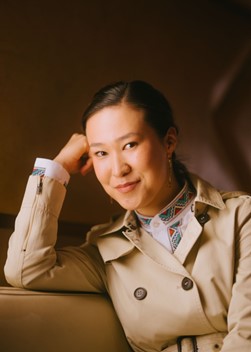
Figure 1 is also indicative of the methodology of resistance the exhibit brings to the constraints of the liberal fishbowl. As opposed to the singular narrative of Uyghurs as a tragedy, the exhibit defines them through the lens of their own culture and lives. Queer theorist Eve Kosofsky Sedgwick contended that a paranoid reading, as seen in the liberal human rights discourses on the Uyghur identity, is but one kind of theoretical practice among other alternative kinds of reading.[8] She contrasts paranoid reading with reparative reading, describing the latter as characterised by hope.[9] Sheik expands upon Sedgwick’s work to locate reparative reading as ‘a joyful dissent against the law’.[10] In his view, within a context where injustice is a given, staging repairs enables communities to discover ways to live joyfully or to simply find ways to live.[11]

For both Sedgwick and Sheik, hope is often fractured and traumatic. But it also allows them a possibility to experience a different affective world, a world where they might feel their way to a different kind of law.[12] UYGHUR: Reclaiming our Story can be seen as such a jurisprudential effort. Its aspiration to reclaim and thereby repair is hopeful and juris generative.[13] Figure 2 is another portrait from the exhibit. It was also used on the cover of pamphlets handed out at the event. The photograph exudes hope, freeness and strength. It was captioned with the following words that poignantly express reparative reading’s re-imagination of the possibilities of freedom:
‘Being Uyghur is not a tragedy, we are not history. We are not the past. Uyghur women are the present and the future. We are change makers and creators. For a long time I lived in fear that because I am a migrant, a Uyghur, a POC, I can’t do what I want, but I no longer feed that narrative. We have seen pain but we turn that into our power.’
Case Study 2: Spectacle, Secret and Travel
Undaunted: Voices from Myanmar’s Resistance (hereinafter, Undaunted) is our second case study.[14] It is a documentary film that was produced in 2022. It has since been screened and discussed in numerous locations globally by allies of the people in Myanmar protesting against military dictatorship since the coup d’état on 1 February 2021. Undaunted was directed by Aung Naing Soe, a Myanmarese multimedia freelancer and now self-exiled journalist. Unlike our previous case study with multiple project collaborators, Soe is often the only name listed against the documentary. However, the initiative itself is plural — about voices. Soe explores resistance across different sections of Myanmar society. He interviews activists and former detainees, capturing their thoughts and recording their spirits, to continue their human rights struggles.
I attended one such international screenings of Undaunted, organised by Myanmarese students at a Human Rights Community meeting in Melbourne Law School. Many of the organisers themselves had participated and/or lost loved ones in the ongoing protests in Myanmar. Soe also virtually joined the screening and discussions that followed. In Case Study 1, we delved into Sheik’s concept of staging repair, with a focus on the practice of repairing itself. However, he also makes a point about the precursor, the practice of staging, which is relevant to Case Study 2. Staging becomes a question of justice when it counter-narrates the law’s attempt to perform ‘a vanishing act’.[15] In other words, staging holds the law to account. Sheik explains this vanishing act as a process where realities subtly diffuse into the ambiance, eventually embedding themselves as commonplace understandings.[16] The erasure of the realities in Myanmar from the popular and penal international human rights law discourses is such a vanishing act. Consequently, Undaunted is an instance of staging, fighting the silences surrounding the protests in Myanmar.
The trailer of Undaunted describes it as a documentary answering three questions: Why are people in Myanmar still protesting against the military dictatorship despite the threats and hardships? What sacrifices have been made along the way? And what are the traumatic repercussions following their arrests or killings? Indeed, the affective world the documentary invokes is grim. As opposed to the reparative impulse of Case Study 1, Undaunted asks a different set of questions regarding visualising human rights in the Global South. It confronts the politics and poetics of how and which sufferings are remembered and privileged.[17] Suvendrini Perera and Joseph Pugliese view such efforts as a call to account and staging of community that unearths asymmetries of power and resources between the Global South and North.[18]
One may question whether Undaunted is merely a spectacle eliciting pity. Often, visual culture is used to convey human rights violations inflicted upon ‘less than human’ victims — abject and distant.[19] However, Perera and Pugliese suggest that it is possible to mark power asymmetries without effacing resistances.[20] They argue that sharing visuals amidst non-visibility, such as in Undaunted, is beyond reductively depicting victims in search of sympathy or paternalistic assistance. It is a form of solidarity or ‘being with’ that navigates between the spectacle and secret.[21] This spectacle is crafted to counter the spectre of secret that stems from the artistic marketplace’s vanishing acts. Hence, Undaunted counters the imbalances between multimedia coverages of human rights sufferings in the Global South and North. Through art activism, it attempts to propel Myanmar’s protests and suffering into visibility.
Soe’s work is also an archive. Undaunted,through its pursuit for visibility, is archiving the situation in Myanmar. It is through being a witness — registering and recording — that artists keep alive the memories of events.[22] Additionally, the line between the artist and the activist is further permeated when the art is used remind audiences of human rights infringements.[23] Undaunted does just that. It documents what happened in the Myanmar protests since 2021, sharing stories of the threats, sacrifices, arrests and killings. Soe’s commitment is grounded in ideas of human rights, justice and freedom.
Art activism, as demonstrated by Soe’s work, has the capacity to mobilise public opinion, solidarity and imagination.[24] This is evident from multiple screenings and discussions that Undaunted has had, domestically and internationally. In the contemporary art world, an activist artists’ national origin is no trivial matter as it imbues their work with distinct values. Trauma is particular and localised. However, a significant part of contemporary art is about its capacity to travel well, both virtually and physically. It bears deep imprints of Soe’s national origin and Global South perspective. Yet, it has also travelled internationally, drawing attention to the protests in Myanmar. This reach stems from a shared sense of humanity and Sliwinski’s right to a dignified image, concepts we discussed earlier.
Analysis: Art Activist as Practising Vernacularisation


Figure 2 and Figure 3 are photographs of the audience at the exhibit UYGHUR: Reclaiming our Story. Consumption of art, particularly those on human rights violations, is often in a state of tension. This is because the human is exposed to the gaze of the audience, who often renders them abject and humiliated.[25] However, contemporary art activism in the Global South has reimagined the relationship between art, activism and human rights. It serves as a critical force in shaping the course of international human rights law and jurisprudence, enabling its local relevance and facilitating its global circulation.
The case studies have shown how art activists are not merely spectators of human rights issues, but rather dynamic participants. They act as witnesses, public intellectuals, and social change agents, among other things.[26] This active engagement, as illustrated through the case studies, reveal a conscious departure from the liberal fishbowl.[27] Instead, through art activism, we see a process of vernacularisation of human rights; that is, the translation and reinterpretation of these rights in ways that hold profound meaning within specific cultural milieus.[28] This practice of vernacularisation, as this paper illustrates, is both a local and global undertaking. It navigates between the distinct realities of the Global South and the broad frameworks of international human rights law. Consequently, it enables the re-articulation of international human rights law in ways that resist dominant marketplace influences.
Art activists in the Global South also face numerous challenges in their work due to their commitment to providing counter-narratives that challenge dominant artistic and human rights discourses. Despite these challenges, their work is essential in subverting established narratives and highlighting the lived realities of persons in the Global South. They draw attention to underrepresented stories, reinterpreting and reimagining human rights struggles through various lenses. This emerges as a potent site for the vernacularisation of human rights, as it not only translates the rhetoric of rights in ways that echo within the Global South but also facilitates the international journey of these narratives.
As per Sally Merry’s perspective, one of the significant advantages offered by the human rights framework, even in situations where it might not resonate strongly with existing ideologies, is the facilitation of a transnational dialogue.[29] This dialogue hinges upon a universal moral code, methodologies for case-building through reporting and documentation, and most notably, access to allies beyond the local community.[30] The language of human rights, when translated into art, bridges geographic and cultural gaps. It makes issues more accessible to organisations and individuals engaged in the global human rights system. This ‘linguistic translation’ promotes international connectivity, helping ideas to travel across borders.[31] Such international links serve as crucial conduits of political resources and ideas that can challenge and reshape rights paradigms. Both case studies demonstrate this ability to facilitate international dialogue. They present narratives that transcend geographical boundaries, fostering understanding and garnering support from international audiences. This supports Merry’s contention that the human rights framework enables ideas to travel, ultimately catalysing transnational exchange and support. This mechanism, then, is closely connected to the relevance and universality of international human rights law itself.[32]
The work of art activists in the Global South are thus fundamental in diversifying and expanding our understanding of human rights and its implementation. Their activism serves as an important jurisprudential activity that continuously reframes and reshapes the contours of international human rights law. Therefore, the art activism of the Global South offers a rich, nuanced, and vibrant platform for the practice of vernacularisation.
Reflecting on the nexus of art activism and international human rights law, certain pertinent questions arise: How might art activists more effectively challenge dominant narratives and amplify marginalised voices emerging from the Global? How can art activism simultaneously encourage domestic and international support for human rights struggles? Merry raises a salient issue in terms of the interplay between resonance and transformation. She postulates that while human rights ideas need to be locally adapted or vernacularised to facilitate their travel, this adaptation could potentially limit their transformative power.[33] If human rights discourses are too resonant with prevailing moralities, they may be accepted but not catalyse significant change.
This resonance dilemma underpins the challenge faced by art activists in the Global South, who must negotiate the delicate balance between local relevance and transformative potential in their work. This balance underscores the complexities inherent in the practice of vernacularisation. Yet, art is more likely to bridge this gap between resonance and transformation than textual discourse on human rights. This is because, due to its wider accessibility and affective capacity, art is likely to travel more and across diverse groups.
Hence, there is value in promoting art activism in human rights frameworks and study their usage. Engaging with such questions will enrich our understanding of art activism’s transformative potential in fostering human rights, inciting social change and broadening the reach of international human rights law. Sheik notes that the method of assembling and scrutinising what appears to be unrelated fragments also constitutes an act of staging by an author. Hence, my choosing the Case Study 1 and 2 as the subject-matter of this essay represents a similar act of staging. This act is rooted in a belief that the intersection of art, activism and law holds a key to a possibly more inclusive and just imagination of the human — ‘affectively, sensorially, emotionally’, as exemplified by our case studies.[34]
Click here for Part I.
Malini Chidambaram is an Assistant Professor of Law at the National Law School of India University (Bengaluru). Previously, she was an Alex Chernov Scholar and Research Assistant at the Melbourne Law School, University of Melbourne (Naarm). Malini’s broad research interests include law and humanities, child and the law, family law, visual cultures, critical legal theory and feminist legal theory.
Her piece draws inspiration from pieces that were experienced by her as as a student in Naarm. The Wurundjeri people of the Kulin Nation are the traditional custodians of this unceded land. The author pays her respects to their Elders and peoples — past, present and emerging. She also extends her appreciation to the organisers, curators and participants (performers and audience alike) of the two events who facilitated her engagement with these works.
Picture Credit: Detroit Institute of Arts
[1] Eve Kosofsky Sedgwick, Touching Feeling: Affect, Pedagogy, Performativity (Duke University Press, Durham and London, 2003).
[2] Sumit Mandal, ‘Valuing Asia: Wong Hoy Cheong’s Quest for a Post-colonial Visual Vocabulary’ (2000) 29 ArtAsiaPacific 73–77 at 73.
[3] Ibid.
[4] Caroline Turner and Jen Webb, ‘The artist as cultural and political activist’ in Art and Human Rights: Contemporary Asian Contexts (Manchester University Press) 36-72.
[5] Ratna Kapur, ‘Alterity, gender equality and the veil’ in Gender, Alterity and Human Rights: Freedom in a Fishbowl (2018) 120-150.
[6] Ibid.
[7] Ibid.
[8] Sedgwick (n 1).
[9] Ibid.
[10] Danish Sheikh, ‘Staging Repair’ (2021) 25 Law Text Culture 144-177.
[11] Ibid.
[12] Sedgwick (n 1); Sheik (n 10).
[13] Rober Cover, ‘Nomos and Narrative’ (1983) 97/4 Harvard Law Review 4-68; Sheik (n 10).
[14] Aung Naing Soe, ‘Undaunted: Voices from Myanmar’s Resistance’ (Athan, 2023).
[15] Sheik (n 10).
[16] Ibid.
[17] Suvendrini Perera and Joseph Pugliese, ‘Between spectacle and secret: the politics of non-visibility and the performance of incompletion’ in Jane Lydon (ed), Visualising Human Rights (UWA Publishing, 2018) 85-100.
[18] Ibid.
[19] Susan Sontag, On Photography (New York: Anchor, 1989) [1977].
[20] Perera and Pugliese (n 17).
[21] Ibid.
[22] Lilie Chouliaraki, Matthew Orwicz, and Robin Greeley, ‘Special Issue: The visual politics of the human’ (2019) 18(3) Visual Communication 301–309.
[23] Turner and Webb (n 4).
[24] Chouliaraki et. al. (n 22).
[25] Jane Lydon (ed), Visualising Human Rights (UWA Press, 2018).
[26] Turner and Webb (n 4).
[27] Kapur (n 5).
[28] Sally Engle Merry, ‘The Global Travel of Women’s Human Rights’ (lecture, Dialogues in Arts and Science, NYU, May 2017).
[29] Sally Engle Merry, ‘Transnational Human Rights and Local Activism: Mapping the Middle’ (2006) 108(1) American Anthropologist 38-51.
[30] Ibid.
[31] Merry (n 28).
[32] Philip Alston and Ryan Goodman, International Human Rights, 4th edition) 530-552; 633-641.
[33] Merry (n 28); Merry (n 29).
[34] Sheik (n 10).
 Jindal Forum for International and Economic Laws
One thought on “Seeing Right/s in the Global South: Art Activism as A Mode of Vernacularisation of International Human Rights Law – Part II”