
Introduction
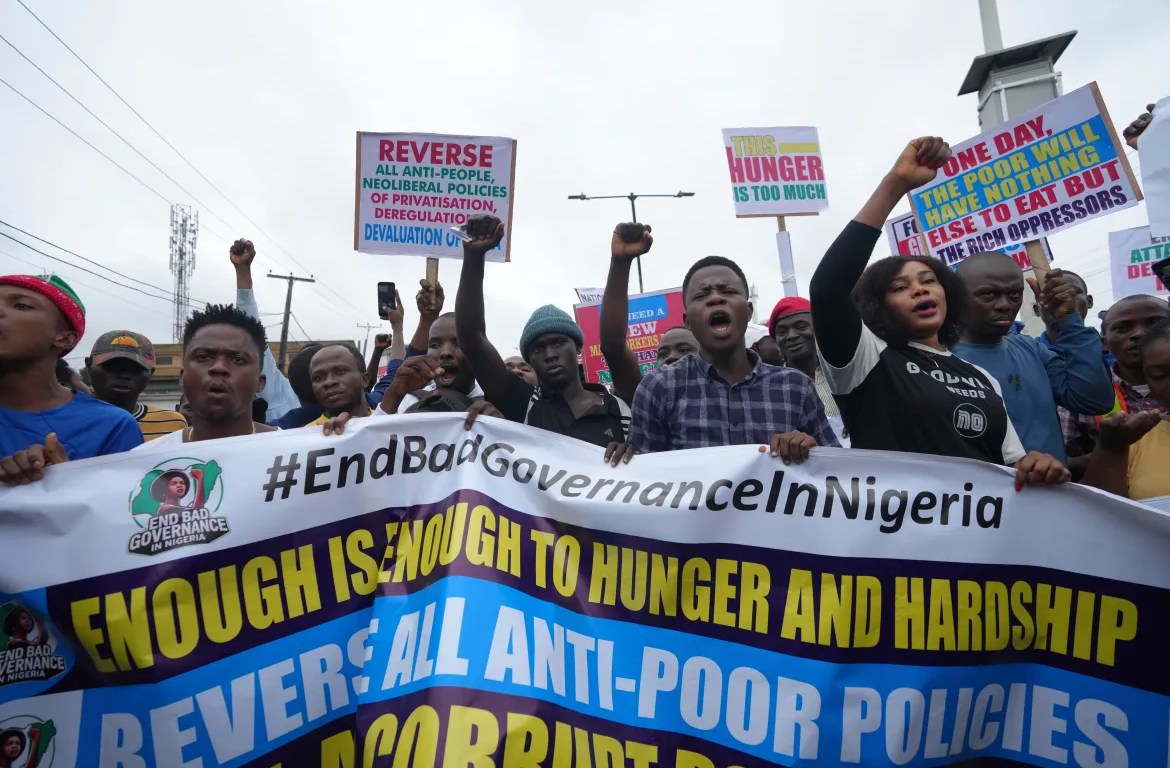
Nigeria is currently undergoing her worst economic situation in a generation. The challenges bedeviling the nation economically have birthed her worst levels of hunger, unemployment, inflation and growing concerns of insecurity. These incidents have not only propelled conversations amongst citizens on the competence of the current government but necessitated the need for a nationwide protest of which citizens of the country were expected to participate in for a ten day period (August 1st – August 10th, 2024).
Plans leading up to the first day of the protest were however met by great resistance from the Federal, State and local governments who seemed to continually discourage citizens from trooping to the streets. The planned demonstrations by Nigerians currently raises a host of questions regarding the effectiveness of protests in general, their likelihood to spiral into the destruction of public institutions and offices, and instances where these rights can be curtailed. In this regard, utilizing Nigeria as a case study, this article will investigate the role of the African Union in ensuring the right to sporadic protests whilst citing the major challenges impeding the actualization of peaceful protests in the continent and provide attainable recommendations.
Protests – An Overview
Protests are a core tenet of a functioning democratic system. They are reflective of the inherent freedom of expression afforded to members of a practicing democracy. In other words, whilst protests strive in democracies, they are suppressed in a military system of government. According to the Inter American Commission on Human and Peoples Rights, ‘A protest is a form of individual or collective action aimed at expressing ideas, views or values of dissent, opposition denunciation or vindication’. As put by Antonio Gutterres in the document ‘The Higher Aspiration: A Call to Action of Human Rights’:
Society is stronger and more resilient when women and men can participate actively in political, economic, and social life and contribute to the creation of the policies that affect their lives, especially when they have the possibility to Access information, dialogue, express their disagreement and unite to express their opinions […]. However, in too many places, the space allocated for this participation is shrinking. There are more and more repressive laws, that impose greater restrictions on freedoms of expression, participation, assembly and association.
Protests are demonstrative in nature, but more importantly, they present opportunities for dialogue between citizens and the apparatus of power. Globally, they are recognized under Article 19 of the United Nations Declarations of Human Rights which provides that ‘Every individual has the right to freedom of opinion and expression; This right includes freedom to hold opinions without interference, to seek and receive information and opinions, and to disseminate them, regardless of frontiers, through any means of expression’. More specifically, Article 20(1) of the same instrument provides that ‘Every individual has the right to freedom of assembly and of peaceful association”. Further, they are contained in Article 19(2) and Article 21 of the International Covenant on Civil and Political Rights.
Whereas protests are guaranteed and enshrined rights of individuals, it is imperative to question their effectiveness. Globally, there are numerous reports on the effectiveness of protests. However, the most recent research conducted on the continent (Africa) suggests that non-violent protests specifically have been a more guaranteed form of effecting changes in government than in any other region of the world. This position bodes well for the continent given the recent seven fold increase in mass demonstrations over the past decade. Classic instances where this appears to have played out includes – the Sudanese protests of 2019 that eventually led to the overthrowing of Omar Al-Bashir or the Algerian protests of 2019 that preceded to the resignation of long-standing president Abdelaziz Bouteflika.
Nonetheless, in as much as these instances show that protests are excellent tools for effecting change in a democracy; they have a great risk of violence which could potentially result in the destruction of lives and property. This side-effect is detrimental both to the participant of these protests and the state.
Protests in Nigeria
Protests are not uncommon within the Nigerian socio-economic sphere. Since the commencement of her fourth republic in 1999, it has consistently witnessed a public display of dissatisfaction with numerous affairs. From the 2003 anti-fuel hike protest to the 2014 ‘Bring back our girls’ protests, to the 2020 EndSARS protest, Nigerians have reaffirmed through their actions that the slightest discomfort with government policies will be met by large outrage in the streets. However, what are the legal parameters of protests in Nigeria – The freedom to protest is enshrined in Section 40 of The 1999 Constitution of The Federal Republic of Nigeria which provides that: Every person shall be entitled to assemble freely and associate with other persons, and in particular he may form or belong to any political party, trade union or any other association for the protection of his interests: however, this right is curtailed under Section 45 of the Constitution of The Federal Republic of Nigeria – which provides that the right to freely assembly and express oneself can be denied a citizen in the interest of defense, public safety, public order, public morality and public health.
Further, entrenched in the Nigerian legislature is also “The Public Order Act” which was created for the sole purpose of ensuring proper and peaceful conduct of public assemblies, meetings and processions. According to Section 2 of this Act “ Any person who is desirous of convening or collecting any assembly or meeting or of forming any procession in any public road or place of public resort shall, unless such assembly, meeting or procession is permitted by a general licence granted under subsection (3) of this section, first make application for a licence to the Governor not less than 48 hours thereto, and if such Governor is satisfied that the assembly, meeting or procession is not likely to cause a breach of the peace, he shall direct any superior police officer to issue a licence, not less than 24 hours thereto, specifying the name of the licensee and defining the conditions on which the assembly, meeting or procession is permitted to take place; and if he is not so satisfied, he shall convey his refusal in like manner to the applicant within the time hereinbefore stipulated.” As implied by this section, any meeting of more than two persons in a public place would require an application made to the governor of the state who shall in-turn liaise with a superior officer and grant the applicants the necessary license.
However, this provision of the Act might easily be construed as a means to frustrate and decelerate the efforts of Nigerians to express their constitutional right. More specifically, when contextualized within the broad claims made against the Nigerian public sector of being lacklustre and tardy, it is not surprising that one may read a different meaning into this provision. This sentiment was also shared by the learned Justice of the Court of Appeal (Adekeye JCA) who in I.G.P. v. A.N.P.P. (2007) 18 NWLR (Pt. 1066) 457 opined:
Section 1 subsections (2), (3), (4). (5), (6), and sections 2, 3.4 of the Public Order Act are inconsistent with the Constitution – they are null and void to the extent of their inconsistency. Public Order Act should be promulgated to compliment sections 39 and 40 of the Constitution in context and not to stifle or cripple it. A rally or placard carrying demonstration has become a form of expression of views on current issues affecting government and the governed in a sovereign state. It is a trend recognized and deeply entrenched in the system of governance in civilized countries – it will not only be primitive but also retrogressive if Nigeria continues to require a pass to hold a rally. We must borrow a leaf from those who have trekked the rugged path of democracy and are now reaping the dividend of their experience.
The decision of the court in I.G.P v A.N.P.P reflects the position of the law that permits/licenses are no longer required to conduct peaceful protests in Nigeria. It is also imperative to note that this position is yet to be legislated. From the above analysis, we observe that until the recent intervention of the judiciary, the execution of protests in Nigeria has inherently been a cumbersome process.
On the other side of the discourse are the thoughts of the African Union on the matter clearly expressed in The African Charter on Human and Peoples Rights. Nigeria became a member state to the African Union on the 25th of May 1963 and it ratified the African Charter on Human and Peoples Right on the 22th of June 1983. As determined by the courts in Centre for Oil Pollution Watch v. N.N.P.C. (2019) 5 NWLR (Pt. 1666) 518, “The African Charter on Peoples’ and Human Rights, an international treaty, having been domesticated, forms part of Nigerian corpus juris. For as long as Nigeria remains signatory to the Charter and other international treaties on environment and other global issues for so long also would the Nigerian courts protect and vindicate human rights entrenched therein.”
Analysis
The right to protest as contained in Article 13 The African Charter on Human and Peoples Right Constitution is couched to grant member states an unrestricted right to assembly and express themselves. ‘Every individual shall have the right to assemble freely with others. The exercise of this right shall be subject only to necessary restrictions provided for by law in particular those enacted in the interest of national security, this safety, health, ethics and rights and freedom of others.’
When contrasted, this provision suggests that the African union has completely handed over the co-ordination and direction of protest to member states. Whereas this appears fair and congruent with the Nigerian Constitution, it is in no way proactive thus leaving the Union in a reactive state. Presently, The African Union currently has a Peace and Security Architecture otherwise known as ‘APSA’. The primary responsibility of this framework is to prevent and manage the resolution of conflicts within the region. It prides itself in detecting early warning signs regarding conflicts and providing adequate and timely responses. Crucial to the enforcement of this framework is also the Peace and Security Council (PSC). The powers of the PSC amongst others include: Anticipate and prevent disputes and conflicts; Undertake peace-making and peace building functions to resolve conflicts where they have occurred; Authorise the mounting and deployment of peace support missions; Recommend to the Assembly; Institute sanctions whenever an unconstitutional change of government takes place in a Member State; and Implement the AU’s common defence policy.
Within the above listed functions is the staggering truth at the heart of this issue – that there is little to no mention of ‘ensuring that Member states guarantee that citizens can engage in non-violent protests.’ This fact is perhaps more surprising given that non-violent protests have been an effective tool for change within the continent. From 2009-2019, one third of all revolutionary mass non-violent protests have occurred in Africa. For context, this is twice as many non-violent protests in Asia. Thus far, the influence of the Peace and Security Council on this matter has only been visible as regards ‘non-violent protests that lead to unconstitutional changes in government’. In the course of discharging its functions within the continent, we see a pattern of the different ways the Peace and Security Council handles issues of non-violent protests in different countries. In Eygpt for instance, when President Mubarak was abruptly removed from power in 2011 by military forces, the citizens of Egypt applauded the military as they had ended a 29 years dictatorship rule. However, the PSC did not take extreme measures against Egypt as it termed the situation as ‘exceptional’ and ‘pro-democracy’. Similarly, in Zimbabwe after President Mugabe’s deposition from power in 2017 by military forces, the nation did not immediately conduct the promised free and fair election required in-order to transition to a democratically elected government and they were never sanctioned nor suspended by the PSC. Finally, in Sudan the PSC did not suspend the nation immediately after the deposition of long term president Omar Al-Bashir until after the death of nearly 10 protesters in Khartoum.
However, the APSA and PSC have been silent on ensuring that the sporadic non-violent protests which can spring up even in constitutionally elected governments in its member states are catered for. Nigeria falls within this bracket as it has not witnessed a military take-over since 1993 and all of its protest since that period has mostly revolved around actions or inactions of the government regarding decisions that affect the nation economically. A similar argument can be made for Kenya who endured weeks of protests from its young populace regarding the tax increase proposed by the government in the Finance Bill. It had been reported that at least 39 people had been killed during the course of this protest.
The Organization of African Union has also been long criticized for its lack of engagement with the various co-operative societies in its member states. Whereas it can be commended for her recent efforts on empowering civil societies such as the ‘Empowering Civil Society for Peace: Initiatives and Collaborations by AU- ECOSOCC under the EU APSA IV Program’ which was designed to specifically enhance civil society participation in The African Peace and Security Architecture, it needs to do more in this regard and establish better connections with civil society organizations. Without an effective communication channel with these societies, the Union is not positioned to have a contextualized view of the challenges on ground in the different member states. Civil Societies are an essential component of a functioning democracy solely for their ability to independently lobby and advocate for issues bothering the state. Their independence is cardinal to ensuring that states are kept on their toes and they continue advocating for the rights of the citizens. In a report by the Centre of Conflict Resolution on The African Unions: Regional and Global Challenges, it was highlighted that The African Union Commission ought to have a better relationship with civil societies, think tanks and the private sector.
Conclusion
In this regard, there is need to explicitly expand the scope of the APSA and that of the PSC to include the sporadic non-violent protest that can arise in member states as a result of government actions that affect citizens economically as opposed to protests that arise as a consequence of unconstitutional changes in government. As was evident in Kenya, the response of The African Union regarding the suppression of protests in places such as Nigeria is usually a mere statement encouraging the leaders of the Member states to adhere to the principles of democracy and good governance, The African Union ought to adopt a more proactive and aggressive approach in ensuring that the rights of Citizens in places like Nigeria are not supressed. Expanding this scope might also include amending the provisions of the African Charter on Human and Peoples rights from completely leaving the supervision of the right to protests to member states alone to ensuring that it is a shared responsibility between the organs of the African Union (Peace and Security Council as is relevant in this case) and Member States.
Further, the African Union needs to be more flexible in the ways it engages with Civil Society Organizations. At the moment, it employs a fusion of formal and informal ways to engage with Civil Society Organizations. Formal in the sense that – it establishes a list of standards to be met in-order for an organization to be accredited within its scheme. Informal in that – certain organization might not meet some of its already established criteria but all the same engage with the African Union via webinar series and position papers. The discourse surrounding civil societies and the African Union is ultimately a question of the trust built over the years. As regards the enforcement of human rights, the ACHPR recently adopted its Resolution on the Criteria for Granting and Maintaining Observer Status to Non-Governmental Organizations working on Human and Peoples’ Rights in Africa – ACHPR/Res.572 (LXXVII) 2023. Whereas this provides some structure, it is will not be beyond the realms of possibility to imagine that very few Nigerian civil societies might meet these requirements and as a result will miss out on the opportunity of being in full co-operation with the African Union. Against this backdrop, it is recommended that the African Union focuses more on utilizing the informal means of engagement with civil societies and maintain flexibility on the formal mode of engagement.
Onyekachi C. Okorie is a lawyer called to the Nigerian Bar in 2024. Prior to that, he obtained an LLB from The University of The Gambia. In 2021, he graduated with an LLM in Trade and Investment Law in Africa from The University of Pretoria. His areas of interest include: Trade, Investment, Human Rights, Environmental Law, IP and Regional Integration.
Picture Credit: Sunday Alabama/ AP Photo/ Aljazeera
 Jindal Forum for International and Economic Laws