
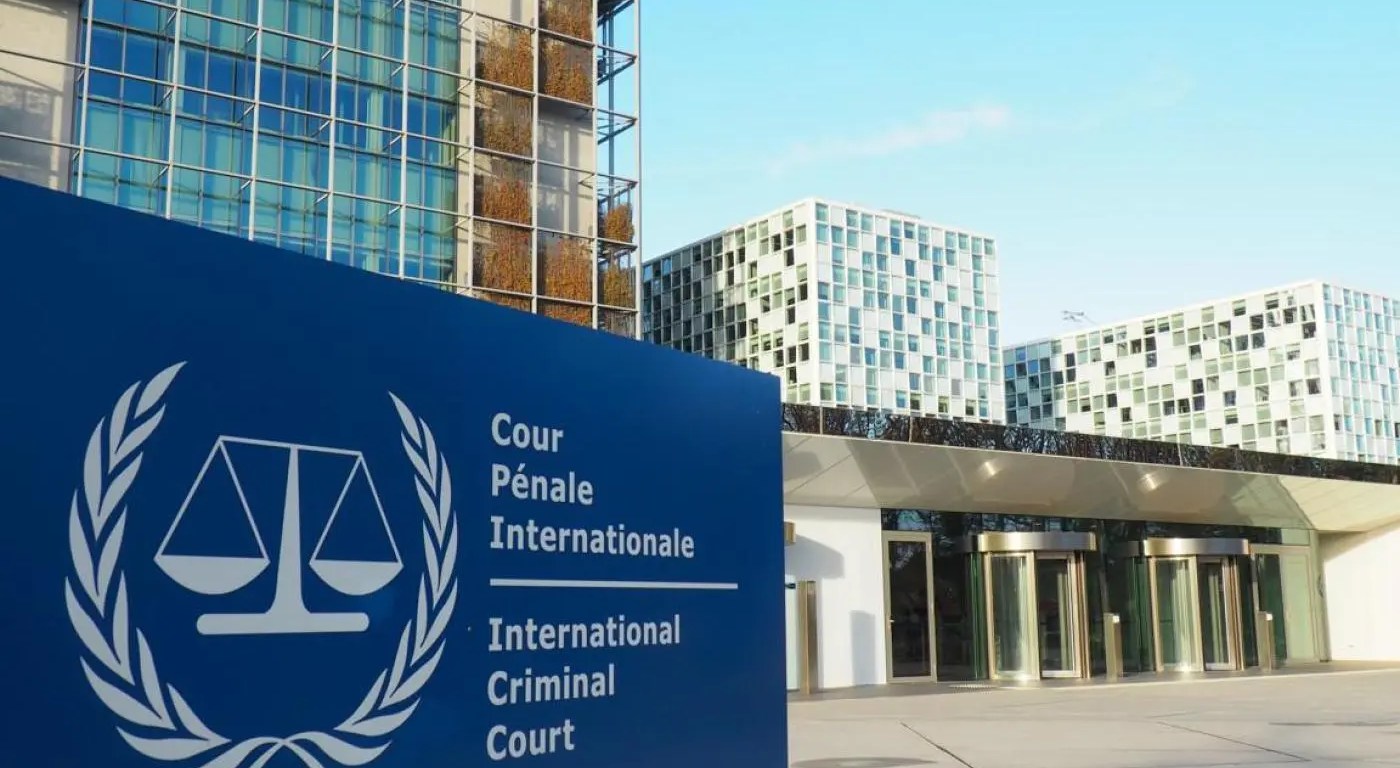
On 21st November 2024, the ICC (International Criminal Court) issued warrants of arrest against, inter alia, the Prime Minister of Israel, Benjamin Netanyahu. Notably, the ICC has also issued an arrest warrant against the Russian President, Vladimir Putin in the last year.
This blog post examines the arguments that can be made against such decisions of the ICC. Subsequently, it suggests that the perceived harms are offset by the multitude of indirect benefits that accrue from these decisions. It also argues that such decisions of the Court – regardless of their enforcement – play an important role in fulfilling the objectives for which the Court was established.
Striking the Giant May Shatter the Sword!
To hope that either Netanyahu or Putin will be arrested and presented before the Court in Hague in the near future, would be but sheer optimism. Therefore, it may be argued that passing of orders in such cases, where compliance of the host country is not expected nor can cooperation be coercively ensured through the UNSC (United Nations Security Council), is not only futile but harmful to the functioning of the Court.
This is because firstly, frequent orders sans cooperation may harm public perception of the effectiveness of the Court. When an indicted individual visits a State Party to the Statute which is legally bound to extradite him but refrains from doing so – due to strong political considerations – it is ultimately the Court’s credibility and authority that stand compromised. What distinguishes an arrest warrant of the Court from a press release of a human rights group, is that the former should be perceived as mandatory, and should instill fear of consequences.
Secondly, investigations at the ICC are heavily resource consuming. The total expenses of the ICC in the first decade reached 750 million Euros, and the average cost per indictment at the ICC has been 60 million USD. Hence, investing vast resources into an investigation that would not lead to the presence of the accused before the court – let alone his trial and conviction – may be wasteful, as these scarce resources may be employed elsewhere with better chances of success in prosecution.
Thirdly, international criminal tribunals need powerful patrons to operate successfully. The ICTY, for instance, received the continuous support of the EU, which was vital for the enforcement of its convictions and decisions. Therefore, investigating situations in countries such as Israel and Russia – which are politically and economically dominant on the global stage – will significantly undercut the capacity of the Court to operate anywhere. Hence, in pursuit of a moral ideal of equal treatment, we would forego the opportunity to prosecute at least some of the criminals. An example could be the threats by American lawmakers not only of non-cooperation, but also of personally targeting the Prosecutor and the associates of the ICC if it exercised jurisdiction in the situation in Palestine. The USA, being a permanent member of the USA, could significantly undercut the operations of the ICC, by vetoing any attempt to refer a matter to the Court through the UNSC, under Art. 13(b) of the Rome Statute. Notably, in cases where the member states fail in their duty of cooperation to the Court, the Court has referred the matter to the UNSC, which acts as an additional deterrent against non-cooperation. Therefore, to have a foe amongst the permanent members of the UNSC can reduce the cooperation it receives from the Council.
Why prosecute the powerful then?
While these concerns are not without merit, I argue that these orders of the Court have many advantages that offset these harms.
Firstly, the ICC has now gained legitimacy in the global opinion. The fact that the UNSC has referred to it on more than one occasion strengthens its global recognition. This growing recognition makes an order of the Court perceived as impartial and reliable; such an order could then be used for effective and justified condemnation and global castigation. Understanding this with an example, the arrest warrant against Putin was particularly celebrated by the Western Block as it could set ground for global condemnation for the Russian atrocities – being backed by an order of a recognized Court, with its notions of objectivity that go beyond political rhetoric of the West condemning Russia for mere political considerations. Therefore, orders of the ICC in such matters can serve as a compass for countries which were neither inclined in favour nor against a situation earlier.
Secondly, such an order by the ICC may also play a significant role in domestic politics, particularly in democracies where free and fair elections are periodically conducted. While the opposition leaders in Russia may not be able to utilise the warrant in their campaign against Putin – considering the democratic deficit –, the warrants against Netanyahu, if issued, may play some role in shaping the public opinion in the USA for its complicity with an individual indicted by the ICC.
Thirdly, an investigation by the Court into such incidents acts as an acknowledgement of the suffering that the victims are facing. This is clear from the celebration of the ICC arrest warrant against Putin by Ukraine. The cases before the ICJ (International Court of Justice) regarding potential genocide and the case of occupation of Palestinian territories by Israel is an example where a recognition of the wrong to the Palestinian people was achieved, even if such recognition does not to lead to any direct and immediate material change in the ground reality. Such recognition has an intrinsic value, which is independent of the enforcement of the order or compliance with it by the erring individual or state. The acknowledgement of suffering of a community serves an important role in post-conflict societies and ensuring transitional justice as argued by Ivor Sokolić and others.
Fourthly, such orders play a historical role in setting the records straight for the generations to come, and authentically documenting historical events of significance. The documents produced in the Court become part of the public record, making it a historical account of events that cannot be easily dismissed. It places the indicted person in an unenvious list of international criminals. Had the Armenian genocide been investigated and documented by a similar international court, then regardless of whether the Turkish commanders would have been tried or not, it would have served as an authentic record of the events, archived and preserved with the Prosecutorial Office, which could have been referred to in the future.
Lastly, but most importantly, the ICC was established to replace the need for ad hoc Tribunals in every dispute like the IMT of Nuremberg, and the Tokyo Court. These Tribunals faced criticism for representing victor’s justice, where a tribunal established by the victors would try the now defeated and powerless accused. A major objective of establishing the ICC as a permanent court, was to ensure that it would try individuals for their crimes regardless of their position and influence.
The allegations of African bias against the ICC have threatened to discredit this envisioned objectivity of the Court. Therefore, conducting investigations even into the powerful countries may remove the tag of subjective prosecution and prove that the Court has succeeded in the purpose of its establishment, by treating the mighty and the meek alike.
Beyond Compliance: The Lasting Impact of the ICC’s Decisions
International law is fundamentally different from domestic law, as coercive compliance and enforcement are rarely attempted, and much is left to the state parties which are considered sovereign. Hence, to argue that any decision of the ICC that cannot be enforced is worthless, would be a misunderstanding of the international legal system.
The decision of the Prosecutor to investigate cases where it can hardly get a conviction or trial is not a misadventure, rather a calculated decision based on a pragmatic understanding of multiple benefits even sans enforcement of the warrant. The fact that Israel has chosen to submit an official challenge to the application for warrants of arrest proves that these decisions have their impact and leave their ripples in the global diplomacy.
However, in choosing cases which are politically challenging, the OTP will need to ensure that the evidence presented is sufficiently strong to combat any political pressure, as well as to develop a communications and public relations strategy to combat criticism.
Hamza Jawed Khan is a third-year student of law at NALSAR Hyderabad, with a keen interest in Constitutional Law and Public International Law.
Picture Credit: Human Rights Watch
 Jindal Forum for International and Economic Laws