
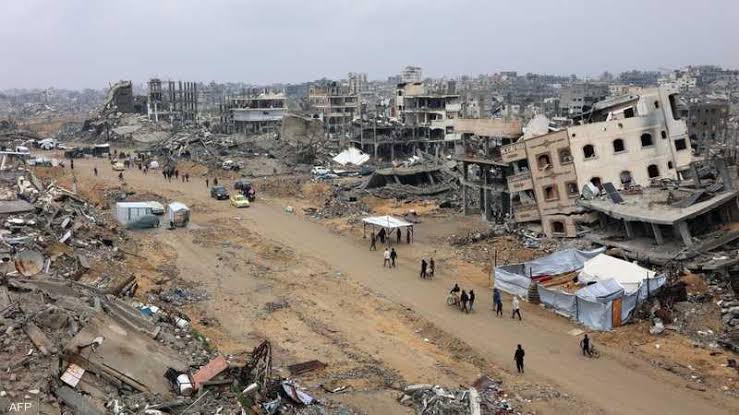
Introduction
Words have power. Sometimes, those in power use words to shape destinies, ignite fear, and spark fires that cannot be extinguished. Words can kill. They do not just reflect hatred but also create more. This is precisely the idea, why a preventive approach is necessary and has been historically adopted for the crime of Genocide. However, somewhere down the line, the preventive approach was diluted.
Both the Genocide Convention (1948) and the Rome Statute (1998) criminalize direct and public incitement to genocide, but with an important difference in preventive scope. The Convention treats incitement as a standalone inchoate crime, punishable even if genocide does not occur, reflecting a clear early-intervention aim. The Rome Statute frames incitement within Individual Criminal Responsibility, linking liability to the speaker’s contribution to genocide. This makes early action narrower in practice: if the speech cannot be clearly connected to the actor’s role in an ongoing or imminent crime, prosecutorial intervention is limited. Thereby waiting for the crime under Article 6 of the Rome Statute to actually go ahead and happen.
This article questions that logic of legal inaction. The focus on proving a causal nexus has weakened the law’s ability to act preventive against dangerous speech. To address this, this blog proposes two indicators; Firstly, the personal and political background of the speaker, and secondly, the tone, medium, and reach of the speech, as core elements in assessing incitement. Embedding these into international practice could help restore the preventive function envisaged by the drafters of the Genocide Convention.
Historical Development
The Streicher case during the Nuremberg trials of 1945–46 marked the first conviction based solely on propaganda as a form of persecution. Julius Streicher, publisher of Der Stürmer, was found guilty of Crimes Against Humanity for his sustained and virulent anti-Semitic campaign over a 25-year period, which included depicting Jews as vermin, accusing them of ritual murder, and calling for their extermination. The Tribunal stressed that his speeches and writings “infected the German mind with the virus of anti-Semitism” and “incited the persecution and extermination of the Jews,” focusing on the cumulative effect of his rhetoric rather than a demonstrable causal link to specific killings. This approach was significant because it framed liability around the content, intent, and foreseeable social impact of the speech, not its direct connection to a physical act of genocide, which is an important foundation for later treatment of incitement as an inchoate offence.
In the coming years, when the Genocide convention was drafted, the makers did criminalize direct and public incitement to genocide as a standalone and inchoate crime, one in which the existence of an effect was not deemed necessary to prosecute. A probable reason for this inchoate nature can be the very nature in which speech crimes happen, they affect both as a direct cause for an event, or towards generating hate that acts as slow poison, which makes the society internalize hate towards a protected group. We see this during the Rwandan Genocide, where hate was so normalized that general people could understand that the minority Tutsi population as the same as Inyenzi, (cockroaches). Thus, normalizing hate against a group, having the potential that justifies causing a genocide. This dehumanisation is referred by Gregory H Stanton, as the fourth stage of the ten stages of genocide.
The preventive scope of Article 3(c) of the Genocide Convention was weakened by the International Law Commission’s 1996 Draft Code, which tied liability for incitement to the actual commission of genocide, by stating that the crime “which in fact occurs”. This reintroduced a causation requirement and diluted early intervention. The Commission did not explicitly articulate a rationale for this departure; however, Schabas has observed that it “revealed a serious misunderstanding” and that it “obviously departed from the spirit of article III(c)” of the UN Genocide Convention, by requiring the underlying crime of genocide to be completed.
Later, in the Akayesu judgement (1998), the ICTR reaffirmed the earlier stance that incitement is an inchoate crime and is complete upon utterance, without requiring that genocide occur. Yet the Trial Chamber still examined events following Akayesu’s statements, seeking a “possible causal link” to massacres, particularly where euphemisms like “fight the Inkotanyi” masked genocidal meaning. The Chamber introduced this causal analysis largely to reinforce the “directness” of the incitement, since the prosecution could not rely on explicit exhortations as in Streicher, and had instead built its case on the cultural and linguistic interpretation of euphemistic speech. By pointing to subsequent killings as evidence that Akayesu’s words were indeed understood as calls to violence, the judges sought to strengthen their conviction. However, this blurred the line between an inchoate and a result-based crime.
The Nahimana (“Media Case”) Trial Chamber went further, treating violence after RTLM broadcasts and Kangura publications as proof of both the directness of incitement and dolus specialis. This risks the post hoc ergo propter hoc fallacy, retroactively defining the criminality of speech by later events. On appeal, the Chamber rejected the “continuing crime” theory and acquitted Nahimana of certain counts for insufficient causation, but introduced a “contemporaneity” requirement, limiting prosecution to incitement closely proximate to acts of genocide. Thereby, making sure, that an act of genocide becomes necessary to say, that indeed incitement took place.
Strengthening the weakened weapon
Recognizing the systemic erosion of preventive jurisprudence, it is imperative that we move beyond passive legal interpretation. The ICC Prosecutor must adopt a more proactive stance, one that seeks to intercept incitement before words metastasize into violence. This calls for a renewed doctrinal approach rooted in early detection and contextual analysis. Wilson in his article tries to take the speech act theory, to develop on the concept of incitement. However, I place less emphasis on discerning this exact mental intent regarding the degree of harm, since it’s impossible to predict whether the fire he ignites in a forest will ultimately spread or die out. Therefore, I adopt a functional evidentiary model that prioritizes observable factors, allowing prosecutors to assess risk and establish accountability without losing sight of the importance of intent in the legal framework.
Similarly, Susan Benesch’s Dangerous Speech Project has developed a preventive framework by identifying risk factors that signal when speech is likely to trigger mass violence, and Gregory Gordon’s Atrocity Speech Law Project has advanced a comprehensive codification scheme to harmonize speech crimes under international law. My proposal differs from both as rather than creating an external risk-monitoring tool (as in Benesch) or embarking on wholesale statutory reform (as in Gordon), I advance a prosecutorial framework that can be used under the ICC’s existing mandate.
I propose a two-step framework to operationalize this shift. After a statement is made, the speaker’s identity and influence must first be scrutinized, on whether their social, political, or institutional position amplifies the impact of their words? Second, there must be a demonstrated history or pattern of hate, this includes past conduct, speech, or propaganda that reveals a consistent animus toward a protected group. These two elements must be assessed within the broader backdrop of the Rome Statute’s protected categories, offering a preventive trigger point well before genocide materializes.
Analysing the First step: Identification
Once a statement has been said in public which has a direct inciteful nature, the courts will have to start the process of arresting the person based on the two steps. The first one is to identify the position and influence of the speaker. This is not merely about who said the words, but who the speaker was in relation to the community, the targeted group, and the context of rising tensions. Their authority, whether political, religious, media-based, or social, will directly affect the weight of their speech. Intent remains crucial for establishing culpability; it reflects the speaker’s aim to cause harm. However, our approach operationalizes this intent into a functional evidentiary role, allowing the courts to act preventively and proactively rather than reactively.
Naturally, a defence counsel may argue that such an approach risks casting too wide a net, that it empowers prosecutors to penalize individuals whose speech, while hateful, does not meet the threshold of incitement. But this concern misunderstands the test. Mere offensive speech is not at issue.
What is at issue is whether the speaker’s social standing transforms otherwise ambiguous rhetoric into a credible call to action. For example, hate speech from a fringe individual in private is qualitatively different from similar speech broadcast by a media mogul or delivered by a head of state. The power to move masses or normalize hate must be central to this inquiry. This step works for the fact that in all cases where inciters were prosecuted, their position and influence was identified, herein, we are just bringing that test before the genocide.
The second step: Historical analysis.
The second step is to identify the contextual and historical background of the society in which such speech was used. Speech, in itself, rarely catalyses mass violence unless it resonates within an ecosystem already primed by structural hate, historical grievances, and cultural conditioning. In this sense, incitement does not emerge in a vacuum; it relies on pre-existing ideological infrastructure. For an analogy, consider, a house filled with petrol will catch fire from a small spark, whereas a concrete house may not. The point of the historical step is to assess whether society has long been “soaked” with prejudice, dehumanization, or structural hate, which makes otherwise ambiguous speech more sustainable to fire (genocide). Thus, legal analysis must account for whether the targeted group has historically been dehumanized, marginalized, or scapegoated in public discourse or state-sponsored narratives.
Consider Rwanda where RTLM broadcasts fuelled genocide in a society long primed with anti-Tutsi hatred. Likewise, Julius Streicher’s Nazi propaganda thrived amid widespread antisemitism. In both cases incitement exploited deep rooted prejudice. Thus, detecting a pattern of animus through past speeches, policies or cultural tropes is key to assessing intent and potential impact.
While this approach introduces a preventive or risk-management element, it does not supplant intent; rather, it operationalizes intent through concrete evidence, allowing prosecutors to anticipate harm without compromising the requirement of culpable mental state.
By situating speech within a continuum of escalating hostility, prosecutors are not inventing intent after the fact but mapping risk trajectories, aligning legal analysis with the preventive goals of international criminal law. In essence, the second step legitimizes the prosecutorial gaze into the past, not to assume guilt, but to map risk trajectories.
Conclusion
As we already discussed, the current approach of prosecuting incitement is already broken, therefore we need to make the preventive and inchoate nature of the crime stronger. This two-step framework of focusing on the speaker’s influence and the historical context of hate, restores the preventive purpose the Genocide Convention intended.
By adopting this preventive, context-aware approach, international law can intervene earlier, stopping hateful speech before it sparks atrocities. Embedding this framework in ICC practice will transform incitement from a reactive charge into a powerful, proactive tool against genocide. The future of prevention depends on embracing this nuanced approach without delay. More research is indeed important to crystalise the two step policy to make it more practically feasible.
Sourav Ghosh is an undergraduate law student at Damodaram Sanjivayya National Law University, Visakhapatnam, India. He is interested in International Humanitarian Law and Environmental Law.
Picture Credit: Euro-Med Human Rights Monitor
 Jindal Forum for International and Economic Laws