
Legal Positivists have exclusively emphasised the cognitive nature of the sources of law. Most of us were introduced to the wondrous contours of international law through its definitions and sources. The ‘definitions’ and ‘sources’ are unavoidable positivist episteme, which conditions the minds of the students in a formalist fashion. The micro-essay, however, reimagines international law through an unorthodox construction. What if one were to argue that the cognition of international law was possible through the imagery of pop culture? What if one were to manifest international law in the form of images that have been featured prominently in motion pictures, music videos, and video games? To cognize and imagine international law purely through pop-culture images, the essay employs philosophical devices such as decontextualization, recontextualization, subliminal effect, and symbolism. The imagery in question is Depeche Mode’s music video ‘Enjoy The Silence’.
Depeche Mode made waves in the 1980s by pioneering the electronic music genre. Hailing from England, the band gained a loyal following owing to their unique use of synthesizers and prophetic lyrics. Their work evoked a sense of curiosity and uneasiness for the world to come. The essay will focus exclusively on the rich imagery featured in the music video. It is in this stride that the device of decontextualization and recontextualization would be employed. The essay presents a thought experiment in decontextualization, sublime, and symbolism, where the impact of the lyrics is subdued to assess the effect of the music video. The imagery of the video, when reimagined from a legal perspective, serves as a leitmotif for the cartographic, subliminal, and proprietary aspects of international law. When re-imagined and re-interpreted, the music video tells a compelling story of international law by creating a nexus with Kantian thoughts on space and Cassirer’s symbolic philosophy.
Decontextualization is the presuppositional philosophical device used in this essay. Decontextualization is an aspect of the literary device of deconstruction that aims towards a democratic understanding of ‘meaning’. The idea is to investigate the assumptions, bias, and hegemonic narratives. These devices attempt to excavate the embedded social and political contexts. Decontextualization and Recontextualization are linguistic devices that tend to reclaim and redefine identities. Decontextualization removes a literary work from its original context to reassess its meaning. Recontextualization introduces the work in a new context. These are critical devices that operate within the domain of altering meanings, challenging audiences’ expectations, and facilitating commentary on social issues by questioning the a priori reception of an artwork. In literary theory, recontextualization employs the method of ‘subversion’ to alter and revisit a work and thereby create unexpected outcomes.
These linguistic devices aim at deriving a democratic understanding of ‘meaning’, where the intentions do not bind the words. In other words, it is an escape from the ‘original intention’ school. The idea is not to view literary works as a ‘message in a bottle’. The utterer shall not hold sway over the meaning of the work. Kecskes labels it as the socio-cognitive perspective of interpretation. It is an aspect of pragmatism that situates the meaning of the term within a societal context, far removed from the reach of the intention-based ‘originalist’ school. Meanings are not a priori but highly contextual. Stephen Davies sees it as an epistemic contest between actual intentionalism and hypothetical intentionalism. The actual intentionalist school categorically rejects any meaning that is alien to the author’s intention. Hypothetical intentionalism divorces the work from its original author’s cradle and separates it from its historical context.
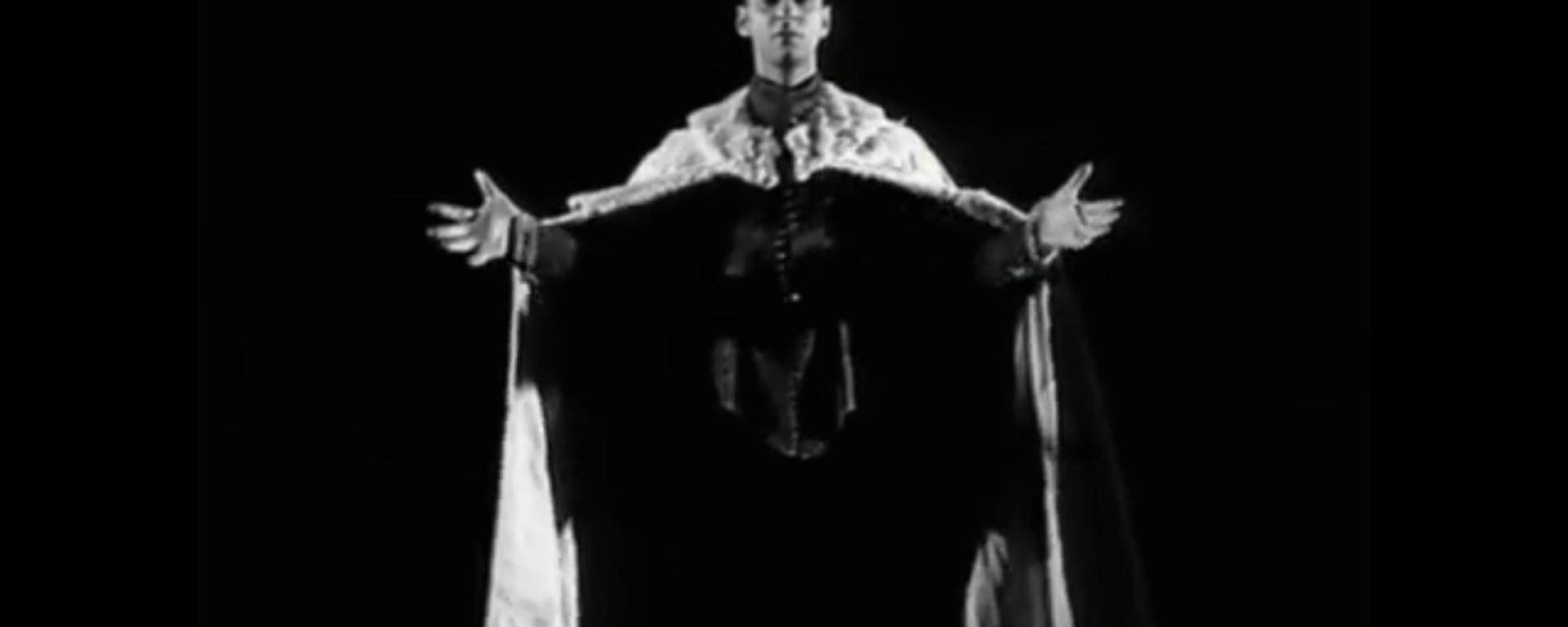
Having explained the ontology and utility of decontextualization and recontextualization, the context of the music video warrants special mention. The imagery of the music video features a wandering king glancing at various landscapes. The music video evokes an immediate connection between the king and the territory. It is within this context that international law can be revisited. The music video, in its decontextualized form (when the lyrics are taken out of the equation), presents the overwhelming presence of the king as representative of his sovereign powers. It is also argued that the king is experiencing a feeling of the sublime. This subliminal feeling, the essay argues, has significant ramifications for the construct of international law.
Sublime can best be described as a rational feeling responsible for a sense of awe, amazement, and wonder. It is a state of mind that occurs when we are bereft of our conventional understanding. Sublime marks the end of our reason. It is our ability to cognize and experience transcendence. The king in the video can be interpreted as questioning whether the grandeur of nature can be surpassed by reason. Some of the images in the video are reminiscent of Der Wanderer Über dem Nebelmeer, the famous Rückenfigur painting by Caspar David Friedrich. It is at this point that the essay interprets international law as a post-subliminal phenomenon.

The serene sense of the sublime is temporary, and the royal gaze cannot resist the inherent cartographic and proprietary tendencies of appropriation. Humans, being rational spatial beings, can overcome their sense of awe and conquer nature by interpreting landscapes in terms of maps and asserting dominance through proprietary techniques such as ownership and possession. The king’s wanderings and commanding presence in the video can be construed as a reflection of ‘imperium’ and ‘dominium’, thus shifting the focus from a subliminal view to the proprietary nature of international law. The gaze of the king in the music video transforms land into territory. The natural landscape in the video is to be radically morphed into a cartographic phenomenon representing a Kantian man who is a reasonable spatial being. Nature’s appropriation is complete through the imperial gaze. Kant’s sense of space is essential, as it is an a priori condition of cognition and a conceptual basis for the mathematical view of territory.
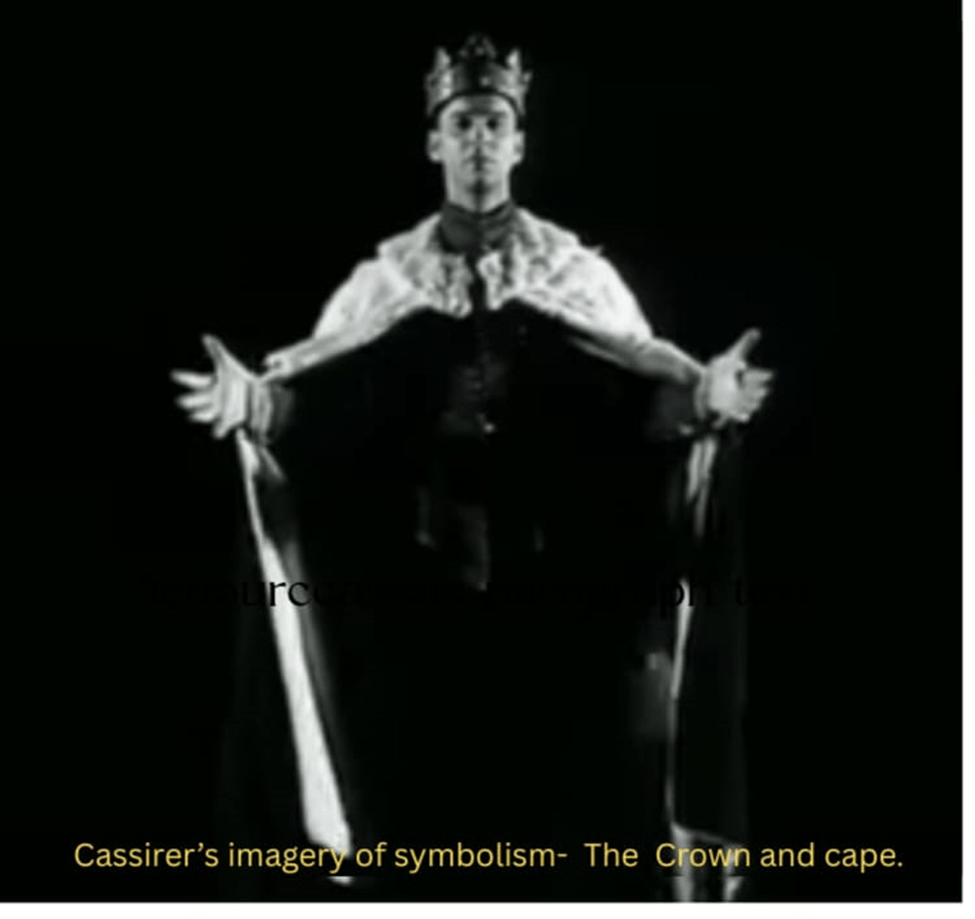
Additionally, the music video is rife with political symbolism. The crown and robe are a prominent feature of the video, which can be interpreted from Cassirer’s view of symbolism. Symbols, being the earliest constructs of cognition, have played a crucial role in political ordering. Symbolism preceded the pure rational and scientific stage of knowledge, in which humans sought to make sense of the world through myths and taboos. Being a closed world of signs and images, it conditions human life into a particular ordering. The signs and images have an immediate impact on the subconscious, thus rendering it vulnerable to obedience through religion or monarchy. Before sovereignty could be expressed in jural terms, it had to be constructed through the symbols of crown, cape, and sceptre. The music video in question uses these political symbols in the most comprehensive manner possible.
The actual lyrics of the song were intended to find a sense of tranquility amidst a chaotic world. Many of the lyrics celebrate the trivial impact of language, and there is a yearning for solitude. When the lyrics are removed, what we have are the images of a sovereign, whose wanderings, when decontextualized, represent a post-subliminal figure who has a desire to subdue nature through mechanical and proprietary means. The aforementioned lyrics of the song, when recontextualized from the point of view of the essay, signify the appropriating tendency of Eurocentric international law represented through the protagonist of the music video:

Dr. Bhanu Pratap is an assistant professor at Faculty of Law, University of Lucknow.
Picture Credit: IMDB
 Jindal Forum for International and Economic Laws