
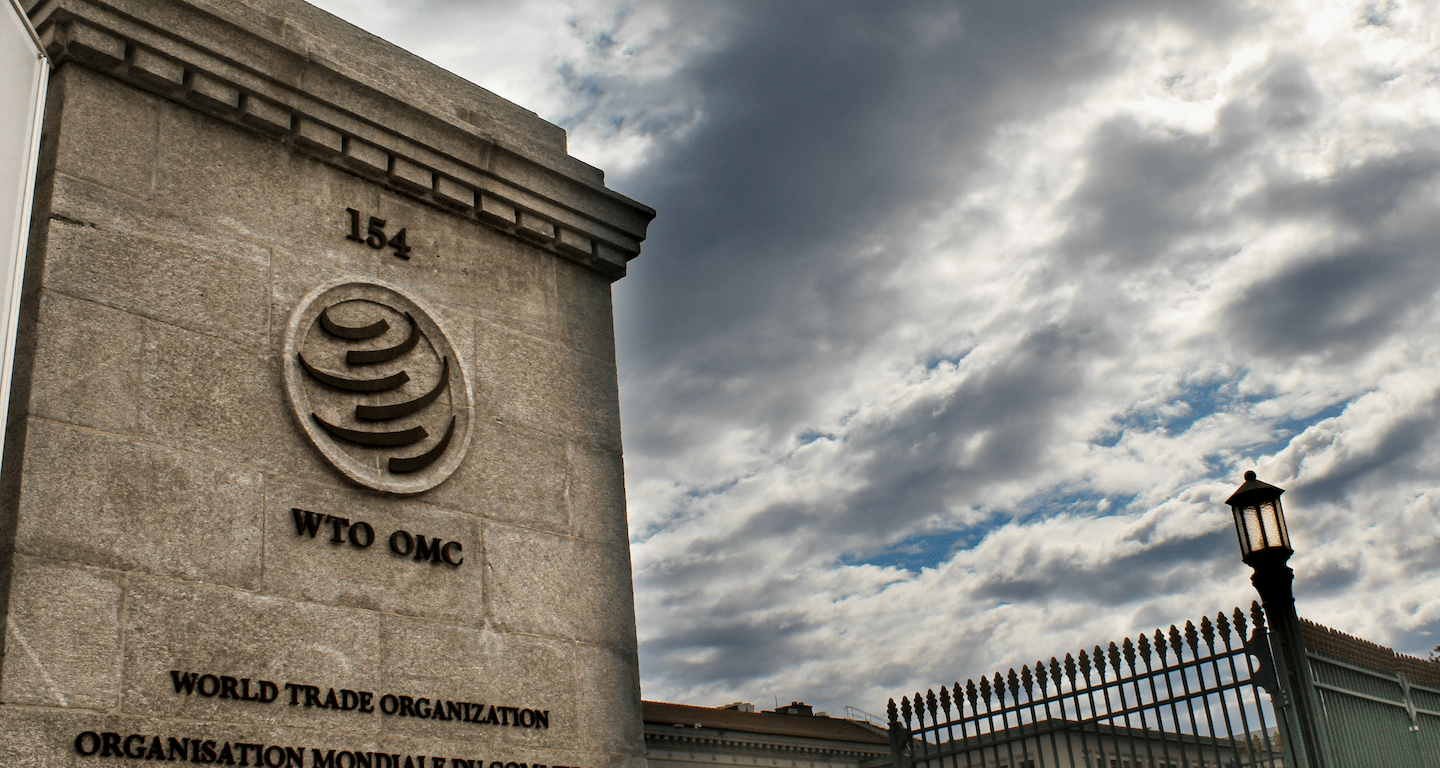
Amidst growing geopolitical tensions, the once sacrosanct principles of global trading system are giving way to a new reality in which unilateralism and weaponisation of trade policy under the guise of national security have become the new normal. The imposition of an additional 25% tariff on Indian imports by the United States, announced on August 6, 2025, has sparked significant concern within international trade law circles. Coming on top of a previously declared 25% levy under the so-called “reciprocal tariff” regime introduced in July, 2025, the United States has effectively raised the cumulative tariff on a wide range of Indian exports to 50%. The justification provided by the U.S. administration for this action was India’s continued importation and resale of Russian oil. This raises important legal questions regarding the consistency of such trade measures with obligations under the World Trade Organization (WTO) framework. This development calls for an analytical engagement with core principles of the General Agreement on Tariffs and Trade (GATT) 1994, including non-discrimination, respect for bound tariffs, and the lawful invocation of national security exceptions.
At the heart of the WTO legal order lies the principle of non-discrimination, enshrined in Article I.1 of GATT 1994, which mandates Most Favoured Nation (MFN) treatment. Under this provision, any advantage granted by a WTO member to products originating from one country must be extended immediately and unconditionally to like products of all other WTO members. The U.S. measure, in targeting India for punitive tariffs while other countries engaged in comparable conduct are not subject to equivalent tariff increases, potentially violates this cornerstone obligation. For instance, credible reports confirm that China, the largest buyer of Russian oil in 2024-25, has not been subjected to a similar tariff escalation. Similarly, Turkey, which maintains robust energy trade relations with Russia, faces tariffs capped at 15%, substantially lower than India’s 50% burden. This differential treatment lacks a formally documented legal basis under U.S. trade policy and constitutes, at a minimum, a de facto denial of MFN treatment.
There are only certain recognised exceptions to the MFN principle, namely the General Exceptions under Article XX of GATT (which allows compromising obligations under the GATT in the interest of protection of public morales, human or plant life and natural resources), preferential tariffs under Article XXIV of GATT (which allows preferential tariff for members of a Customs Union or Free Trade Area) and the differential treatment allowed under the Enabling Clause. The WTO Appellate Body’s jurisprudence, particularly in EC – Tariff Preferences (WT/DS246) is instructive in this context. In that case, the Appellate Body held that any preferential treatment offered to a select group of countries under the Generalized System of Preferences (GSP) must be based on objective and transparent criteria for justification under the Enabling Clause. If there is no such objective criterion, any policy must apply equally to all similarly situated countries.
While, this ruling is with respect to developing countries, the implication is clear: discriminatory application of trade preferences or penalties, absence of a legally recognised justification, is impermissible. By analogy, the United States’ imposition of a harsher tariff regime on India, without imposing comparable measures on other importers of Russian oil, is likely to be viewed as an unjustifiable departure from MFN obligations as this situation is not covered by any of the recognised exceptions to the MFN principle. US has neither signed a Free Trade Agreement with Turkey or China nor does it have any objective criteria for allowing a regime with preferential tariffs for Turkey or China.
In addition to the MFN concerns, the U.S. measure raises potential issues under Article II of GATT 1994, which prohibits WTO members from imposing duties or charges on imports that exceed the bound rates set forth in their schedules of concessions. These bound tariffs constitute a critical element of the legal certainty that WTO rules are intended to provide. If the cumulative 50% tariff applied to Indian goods exceeds the U.S.’s binding commitments, as scheduled with the WTO, the measure would constitute a prima facie violation of Article II:1. In Argentina – Safeguard Measures on Imports of Footwear, it has been observed that measures exceeding bound rates, even if temporary or presented as safeguard actions, are inconsistent with WTO obligations unless proper procedures under the Agreement on Safeguards are followed. In the present case, the tariffs have been imposed unilaterally without resort to multilateral mechanisms, further undermining their legitimacy under WTO law.
The U.S. administration has suggested that the tariff measure is justified under Article XXI of GATT 1994, which allows members to take measures which it considers necessary for the protection of its essential security interests. Historically a rarely invoked and even more rarely adjudicated provision. Article XXI was scrutinized in the landmark case Russia – Traffic in Transit (WT/DS512), where the WTO Panel clarified that while members have some discretion in invoking the national security exception, this discretion is not absolute. The Panel held that the invocation must be made in good faith and must relate to a genuine situation of war or other emergency in international relations. The current justification offered by the United States that India’s purchase of Russian oil undermines U.S. foreign policy may not meet the threshold of a real and immediate security emergency.
The Panel’s interpretation of “emergency in international relations” is about a situation that creates a direct security threat to the invoking country. While the war in Ukraine may qualify as a genuine emergency, the U.S would need to demonstrate that India’s oil purchases directly threaten U.S security essential interest, not just that they conflict with U.S foreign policy. Merely undermining a foreign policy objective does not equate to the type of “crisis” or “general instability” that the Panel contemplated as the basis for a national security exception. Further, the invocation of Article XXI has to be in good faith, a dispute based on disagreement over foreign policy rather than a direct threat to a country’s military or territorial integrity can be viewed as an attempt to leverage trade rules to coerce a geo political outcome.
This analysis gains further weight from the series of WTO disputes brought against earlier U.S. tariffs on steel and aluminium products, also imposed under the same national security clause during Trump’s first term. In US – Steel and Aluminium Products (WT/DS544 and related cases). WTO panels found that those measures were inconsistent with WTO obligations and that the circumstances cited by the United States did not amount to a situation justifying the invocation of Article XXI. That ruling not only confirms that the national security exception is subject to scrutiny by the WTO’s Dispute Settlement Body (DSB) but also sets a precedent that could be applied against the current tariff hike on India. Should India decide to initiate WTO dispute settlement proceedings under the Dispute Settlement Undertaking (DSU), it would likely argue that the U.S. measure constitutes a violation of both Article I and Article II of GATT, and that the Article XXI defence is improperly invoked.
India’s recourse at the WTO would begin with a request for consultations under Article 4 of the DSU. If consultations fail, India could request the establishment of a panel under Article 6, potentially leading to a finding of violation and authorization to suspend concessions under Article 22 if compliance is not forthcoming. While the appellate mechanism of the WTO remains paralysed due to the U.S. blocking appointments to the Appellate Body, a panel ruling in India’s favour would still carry significant legal and political weight, especially if joined by other affected countries or amicus interventions. However, it seems unlikely that India will initiate a challenge at the WTO as it is currently negotiating a Free Trade Agreement with the United States and might not want to jeopardise it.
Ultimately, this episode is emblematic of a broader trend toward unilateralism and weaponization of trade policy under the guise of national security. The proliferation of such measures threatens to undermine the multilateral trading system’s core principles of predictability, transparency, and non-discrimination. By targeting India while exempting other comparable trading partners, the United States not only risks violating binding legal commitments under GATT 1994 but also undermines its credibility as a proponent of rules-based trade. The legal and strategic implications of this tariff measure will unfold in the coming months, but from a doctrinal standpoint, the case for its inconsistency with WTO law appears compelling.
Sharada Kalale and Shreya Sahu are final-year students at the National Law University, Delhi, with a strong academic interest in international trade law and its intersection with policy.
Picture Credit: Bernsten / Shutterstock
 Jindal Forum for International and Economic Laws