
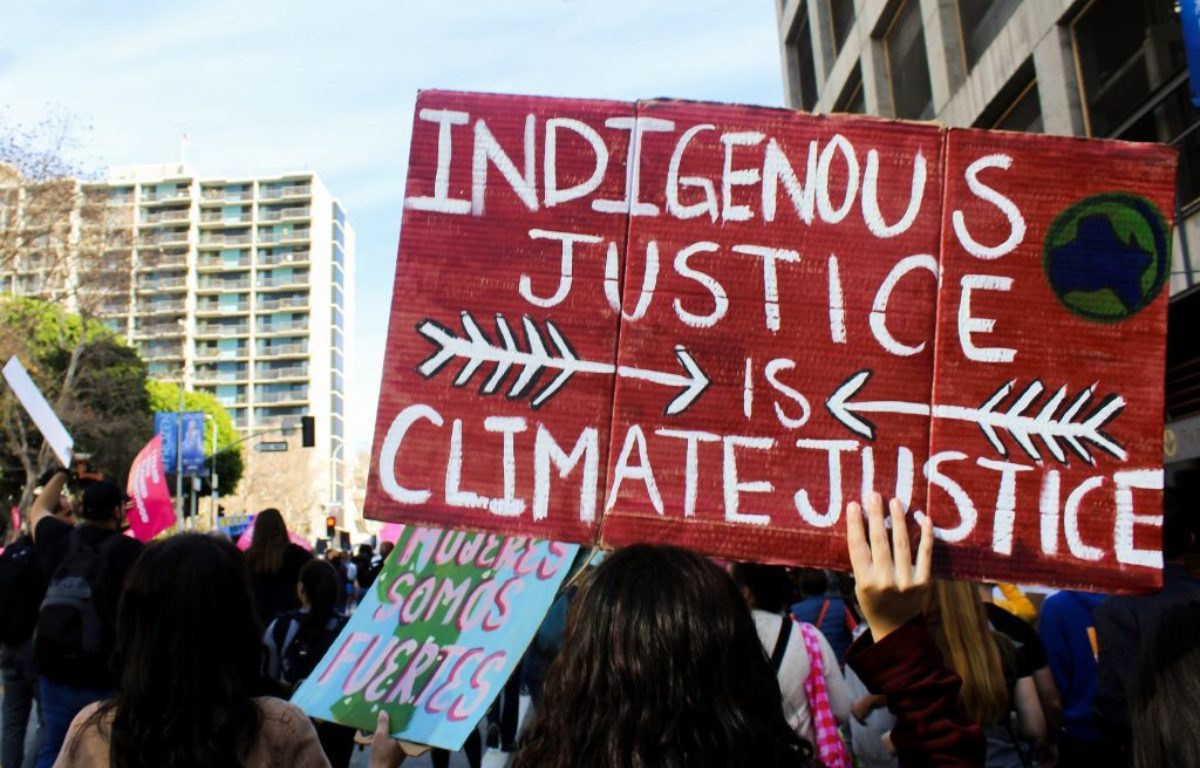
Introduction
International Environmental Law (IEL), as a distinct field of Public International Law (PIL), finds its origins in the 1960s and 1970s, first officially recognized through the Stockholm Declaration, 1972. This declaration gave birth to the United Nations Environment Program (UNEP), and paved the way for future environment-related international documents, culminating in the Rio Declaration, 1992. Foundational environmental issues were addressed and codified during this period, ranging from tackling ozone depletion, preventing transboundary pollution, and regulating hazardous wastes. Fundamental environmental law principles, including the Precautionary Principle, Sustainable Development, and the Principle of Cooperation, also emerged parallelly.
However, a crucial set of stakeholders was conspicuously absent during the formation and implementation of these instruments: the world’s indigenous communities. Indigenous rights, centred on the self-determination of indigenous peoples, began to gain formal recognition at the international stage in the 2000s, with the adoption of the United Nations Declaration on the Rights of Indigenous Peoples (UNDRIP) in 2007. This came decades after the core principles and regulations of IEL had already been established.
The temporal gap between the development of IEL and the recognition of indigenous rights resulted in the latter being formulated through the lens of environmental protection, without incorporation of indigenous perspectives. While this temporal gap is important if one is to re-imagine IEL strictly within the paradigm of positive international law, this article attempts to push the boundaries of the modern legal system by arguing for an inclusion of indigenous perspectives which is not contingent on “formal recognition” and must exist nonetheless. This is because, more fundamentally, the exclusion of indigenous communities from IEL was never simply a matter of timing or recognition, it stems from deeper structural assumptions within IEL itself. This article critiques that imbalance and makes the case for rethinking IEL towards a decolonial and indigenous-inclusive framework.
Whose Law, Whose Land? IEL’s Exclusion of Indigenous Peoples
IEL developed as a response to State-led economic development and its adverse consequences on the environment, emphasizing that such growth should coexist with ecological sustainability. As a result, IEL principles regulating environmental harm arose in a State-centric structure, where States were both the creators and subjects of international environmental norms.
This gave rise to the exclusion of indigenous communities in the IEL framework. Indigenous communities, despite possessing direct access to large swathes of biodiversity and generational knowledge, were not meaningfully consulted during the development of IEL’s core principles. While this may seem to be a procedural exclusion, it was symptomatic of a deeper structural exclusion: Indigenous knowledge systems were incompatible with the Western foundations of IEL. This section first explores the apparent procedural exclusion, and then examines its structural underpinnings that prevented the integration of indigenous worldviews into IEL.
The Apparent Procedural Exclusion of Indigenous Peoples
As with much of international law at the time, IEL was dominated by Global North actors during its formation. Their ‘solutions’ to environmental harm arose from commodifying the natural world, treating biodiversity, nature, and climate as mere resources.
This understanding is in stark contrast to an indigenous understanding of the environment. Indigenous communities have historically developed a living, symbiotic relationship between humans and the natural world. Traditional knowledge systems recognize water, air and biodiversity as living beings with agency, creating reciprocal relationships and responsibilities among all entities. For instance, forests have the responsibility to provide shelter and food, while people have a corresponding responsibility to nurture and sustain them.
Indigenous communities occupy territories that contain nearly 80% of the world’s biodiversity. Recognizing their role in sustaining ecosystems is the first step toward acknowledging that the natural world can only be protected if the perspectives of its foremost guardians are prioritized while framing definitions and rules.
Yet, indigenous voices remain excluded from both the formation and implementation of IEL, which rarely recognizes the environment as a living, relational system. The consequences of placing abstract scientific studies ahead of lived knowledge is evident in the failure of global systems to halt ecological decline. Unfortunately, it is the indigenous communities that are most vulnerable to losing their livelihoods and the ecosystems they have safeguarded for millennia.
Recent efforts to promote the inclusion of indigenous voices in IEL processes have largely been symbolic. Activist Minnie Degawan criticised international bodies for only prioritising ‘scientific’ approaches to understanding the environment, while sidelining the practical knowledge systems of indigenous communities. Her recommendation to include traditional knowledge in the assessment report of the Intergovernmental Panel on Climate Change was rejected on the grounds that such knowledge was not “peer-reviewed”, reflecting a deep systemic bias in the manner in which environmental expertise is legitimized in law. What this reveals is not just a preference for science, but the worldview that comes with it. Scientific framing often treat the environment as a stock of resources whose use is inevitable, with the goal being to balance exploitation and conservation. By contrast, indigenous perspectives challenge the very idea that exploitation can ever coexist with sustainability. They see nature as a living, relational system, where responsibilities, not “uses”, define human interaction with the environment.
At the same time, indigenous knowledge systems differ from other modern knowledge systems in form as much as in substance. Much of this knowledge is transmitted through storytelling, rituals and art, practices that international institutions frequently dismiss as “informal” and therefore unfit for legal or policy frameworks. This dismissal has reinforced the perception that indigenous knowledge lacks the legitimacy of “formal” scientific expertise, even though it is precisely these cultural forms that embed ecological wisdom across generations.
Against this backdrop, the Convention on Biological Diversity (CBD) stands out as a rare example of meaningful participation of indigenous groups in environmental law. Adopted in 1992, the CBD was unprecedented in its recognition of indigenous knowledge, notably through Article 8(j), which acknowledges the role of Indigenous Peoples and Local Communities (IPLCs) in conserving biodiversity. Despite initial criticism pointing toward mere symbolic inclusion, the subsequent functioning of the Conference of Parties (CoPs) and the adoption of the Nagoya Protocol in 2010 marked a significant shift. They ensured the active involvement of indigenous voices in decision-making which did not stop merely at participation but also extended to exercising considerable influence. The CBD offers a blueprint for broader environmental governance.
The Structural Exclusion at the Root of the Problem
What the procedural exclusion of indigenous peoples ultimately points to is the deeper structural exclusion that has long defined IEL. From its inception, IEL was built on Western legal and epistemic foundations, emerging from a worldview where environmental harm was to be managed by States through ‘scientific’ expertise. Within this framework, indigenous systems of thought could not be legible as law, as shown above. This structural orientation is why indigenous worldviews were never incorporated into IEL from the outset. The failure to include them was not due to a lack of available knowledge or legal frameworks, but because IEL was structurally incapable of recognizing non-Western knowledge systems as legitimate. Long before indigenous rights instruments were adopted, communities had already developed enduring systems of governance over land, water, and climate. The problem was not their absence, but their active dismissal.
For instance, hunting regulations in IEL are largely framed through a conservationist lens. These regulations apply through blanket bans enforced uniformly, without acknowledging sustainable subsistence hunting by indigenous groups as a legitimate cultural practice. The Convention on the Conservation of Migratory Species of Wild Animals (CMS), which regulates hunting of endangered species, illustrates this dynamic clearly. While the convention text allows for an exception to permit hunting to accommodate the needs of traditional users, the Conference of Parties (CoP) has consistently mandated that this exception be interpreted narrowly. Indigenous hunting practices, rooted in sustainability and reciprocity, are conflated with commercial poaching, which is, in fact, the real driver of species decline. This reinforces the idea that indigenous practices are at odds with conservation, while in reality they are rooted in it.
When such ‘conflicts’ arise, PIL resorts to doctrines like lex specialis (special law prevails over general law) to resolve them. In practice, this has meant that the dominant environmental regime overrides indigenous practices. The World Trade Organizations EC – Seal Products ruling is a telling example. While the Appellate Body upheld the EU’s ban on seal products as a measure “necessary to protect public morals,” the Indigenous Communities (IC) Exception was found largely unworkable. Far from protecting indigenous Inuit traditions, it divided sealing communities, imposed onerous burdens of proof on hunters, and left market access contingent on criteria defined by the EU. Indigenous practices were thus reduced to narrow exemptions within a morality-based ban, rather than recognised as broader claims to livelihood. The case shows how inclusion on paper can mask deeper structural bias, where indigenous practices are tolerated only within terms set by external regimes.
The adoption of UNDRIP in 2007 marked a significant milestone in the formal recognition of indigenous self-determination. It could have catalyzed a moment when IEL re-evaluated its structural assumptions. Yet, IEL has remained largely rigid and siloed, missing an opportunity to begin its transformation even in light of the newly gained legitimacy of indigenous traditions in the modern legal system. This is not to say that IEL’s engagement with indigenous communities should be conditional upon frameworks like UNDRIP. The right to shape environmental governance does not stem from recognition, “self-determination”, or “rights” in international instruments but from the fact that indigenous communities have always lived in reciprocal relationships with ecosystems and governed those relationships with effective legal traditions. IEL should have integrated these perspectives from the beginning because these systems offer an enduring and sustainable understanding of the environment.
This structural exclusion is further entrenched by the fact that environmental treaties are binding on states, while UNDRIP and other indigenous instruments are termed “aspirational” and remain non-binding. Such reliance on recognition-based frameworks perpetuates the very colonial hierarchies that IEL should seek to redress. Indigenous peoples are not waiting to be discovered or recognized as self-determining, they already are. Rather than demanding that indigenous practices prove their legitimacy within IEL’s existing framework, IEL must situate itself within indigenous worldviews. Even in the absence of formal recognition, these laws hold value in their own right. The imperative, then, is not simply to adapt IEL in response to UNDRIP, but to acknowledge that indigenous knowledge offers a legitimate way of thinking about responsibility, relationality and care for the earth. This shift is not about accommodation, but about reorientation.
Towards an Indigenous-Inclusive Framework
Making IEL just and effective requires more than procedural inclusion or structural reform in isolation. The procedural marginalization of indigenous peoples flows directly from structural assumptions about whose knowledge counts as legitimate. Reimagining IEL therefore requires an integrated shift: one that not only makes space for indigenous participation, but also reorients the foundational principles of IEL to reflect indigenous ways of thinking. As the climate crisis deepens, it becomes imperative for IEL to move beyond narrow, top-down models and embrace community-led ways of caring for ecosystems. Indigenous communities have long demonstrated how to live in balance with the earth.
Legal frameworks must be reimagined through the concepts of Indigenous Environmental Justice (IEJ) and Fourth World Approaches to International law (FWAIL), both of which bring the knowledge and ideas of indigenous peoples to the forefront. IEJ calls for environmental governance rooted in indigenous values. FWAIL challenges the colonial foundations of international law and calls for indigenous peoples to be recognised as equal actors in shaping its norms.
Recent developments offer cautious optimism for a more integrated and decolonial IEL framework. In the Torres Strait case, the UN Human Rights Committee held that Australia’s failure to protect indigenous communities from rising sea levels violated their rights to culture and family life. During the proceedings of the International Court of Justice’s (ICJ) Advisory opinion on Climate Change, experts stressed that indigenous self-governance is inseparable from climate action. These interventions indicate acceptance of the structural links between IEL and indigenous justice. An indigenous-inclusive IEL is not just a matter of justice, it is necessary for planetary survival. And it is not a vision for the future, but one that must be developed with urgency.
Amita Kaka is a third year law student at National Law University, Jodhpur. Her research interests include international law, environmental law and constitutional law.
Picture Credit: Earth.Org
 Jindal Forum for International and Economic Laws