

On Connections, and Interconnectedness of International Law

International law, traditionally seen as a framework for governing relations and resolving disputes between nations, often receives a critical reception. Many domestic legal scholars view it as overshadowed by state material interests and power-driven behavior, suggesting its limited effectiveness on the global stage. However, such perspectives may fail to capture the essence of international law’s true potential. (Richard Steinbarg). This symposium seeks to challenge these traditional views by embracing the concept of the “transnational legal process” (TLP), a term advocated by Harold Hongju Koh. TLP advocates for a more expansive interpretation of international law, where not only states but also non-state actors—individuals, groups, and civil societies—play pivotal roles. These actors engage in a continuous dialogue, creating and refining norms that encourage adherence to global rules, thus fostering their internalization within domestic legal systems (Anne-Marie Slaughter.)
Presently, as we witness human rights violations, environmental crises, and global conflicts, (Human Rights Watch 2024) the significance of TLP and international law becomes increasingly apparent. However, despite the observable disruptions, the transformative potential and impact of these legal frameworks are frequently undervalued. This symposium will serve as a platform for scholars and practitioners to explore the transformative power of international law and the role of non-state actors in maintaining international order. We aim to highlight the “stickiness” of TLP—its capacity to embed itself within the authoritative structures that underpin the world community, influencing behavior in complex and diffuse ways that extend beyond direct obedience.
A great note of thanks goes out to our Faculty Director, Dr. Pallavi Kishore, and our Advisors, Mahima, Pushkar and Abhijeet for graciously volunteering their time editing our pieces.
In our 2024 edition, Ishita Chakrabarty and Radhika Goyal co-author the piece titled ‘Give and Take: Exploring Independent Accountability Mechanisms and their Relationship to Transnational Law’. This analysis delves into the operation of Independent Accountability Mechanisms (IAMs) and their affiliated Multilateral Development Banks (MDBs). It situates IAMs within the framework of international law and provides a concise examination of the efficacy of IAMs in influencing project-affected communities, domestic legal systems, and international organizations.
In Week 2, Somabha Bandopadhyay writes on ‘Gender: An Elusive Issue under International Human Rights Law.’ This work investigates the persistent exclusion of the transgender community from Gender Justice Movements. The piece theorizes the reasons behind the marginalization of this community and examines the victimization and discrimination that carry a criminalizing aspect. Additionally, she explores the role of international human rights law (IHRL) in addressing these challenges at domestic level.
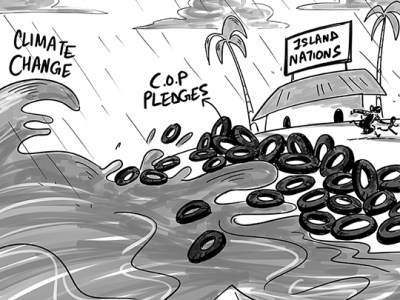
In Week 3, Gauri Anand writes on ‘Climate Change and Vulnerability – Does International Environmental Law Matter?’ She contends that states have frequently maintained that sovereignty and national interests supersede adherence to international legal frameworks, particularly in the realm of environmental law. Gauri critically examines Transnational Legal Process (TLP) within the specific context of climate vulnerability to evaluate whether, as posited by Harold Koh, international law indeed matters.
In Week 4, Amrisha Tripathi authors “The Dichotomy of Refugee Protection in India: An Analysis Through the Lens of Mohammad Salimullah v. Union of India’‘. In this, she engages with the concept of the Transnational Legal Process (TLP) to explore how global legal standards are integrated within national legal frameworks. She utilizes the Mohammad Salimullah case as a focal point to elucidate the conflicts between India’s sovereign rights and its international legal commitments, highlighting the challenges related to the rights and protections extended to refugees within the Indian legal context.
In week 5, Malini Chidambaram contributes to the symposium on ‘Seeing Right(s) in the Global South: Art Activism as a Mode of Vernacularisation of International Human Rights Law.’ This insightful examination of art activism in the Global South evaluates how international human rights law is reinterpreted through localized lenses. Chidambaram analyzes two case studies: the exhibit “Uyghur: Reclaiming Our Story” and the documentary “Undaunted: Voices from Myanmar’s Resistance.” These are used to explore how international human rights norms are rearticulated in contexts that are distinctively resistant to conventional market-driven frameworks.
Finally, we feature an interview with Justin Sobion which sheds light on the nuanced disparities between theoretical conceptions and practical applications within International Environmental Law. Justin argues that the emerging recognition of rivers as distinct legal entities endowed with rights, facilitates the connection between International Environmental Law and domestic legal frameworks. Additionally, Justin advocates for the formal recognition of ecocide as an international crime and emphasizes the indispensable role of Civil Society Organizations in advancing environmental justice. Moreover, Justin reflects on the necessity for a more inclusive framework, advocating for Third World Approaches to International Law, that accommodates the perspectives of the Global South within the discourse on state obligations to climate change.
– Adithi and Garvit




 Jindal Forum for International and Economic Laws