
Introduction
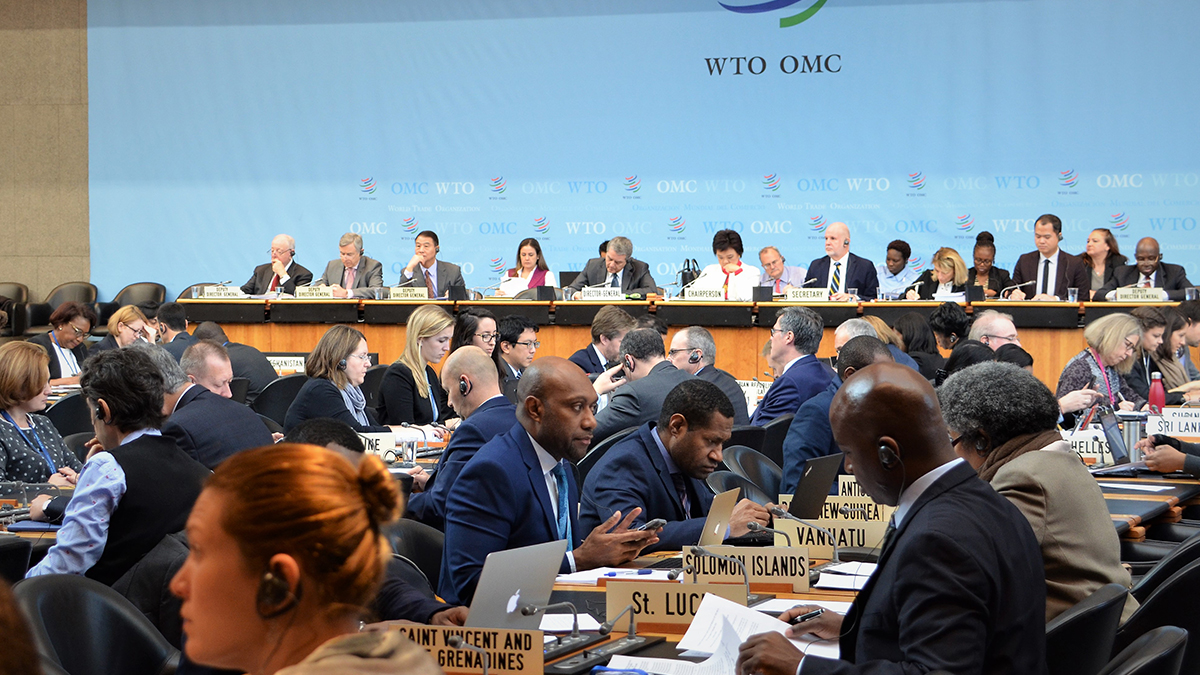
The WTO e-commerce moratorium is an agreement to continue with the current mandate of not imposing tariffs, or customs taxes, on electronic transmissions. In the second Ministerial Conference in 1998, WTO members agreed for the first time to implement a moratorium on electronic transmission for two years as a part of the WTO’s multilateral work program on trade-related aspects of e-commerce. The major highlight of Ministerial Conference 13 (MC 13) was the agreement to renew the moratorium on customs duties once again until MC 14 or March 21, 2026, whichever is earlier. This extension has fuelled the ongoing tussle between the developed and developing countries on the impact and impression of the WTO moratorium on their respective economies. The lack of understanding and consensus among the WTO members is resulting in difficulty in estimating the impact of the WTO moratorium, causing hindrances in implementation and prospective reforms.
This extension was highly opposed by some developing countries like India, South Africa, and Indonesia. These developing countries contended that tariffs are essential for protecting nascent industries from established competitors until they achieve economies of scale. Allowing duty-free imports of digital products could impede the growth of fledgling digital industries in developing countries, eventually resulting in a digital divide accentuating the gap between developed, developing, and Least Developed Countries(LDCs). The article argues that the WTO e-commerce moratorium, which prohibits tariffs on electronic transmissions, fuels tension between developed and developing countries. It calls for a balanced approach, considering the economic needs of developing nations while promoting international cooperation to ensure equitable growth in the global digital economy.
India’s Stance on WTO Moratorium
At the Informal General Council meeting on November 27, 2018, India expressed concerns about the e-commerce moratorium. India argued that this moratorium significantly deprives developing countries and LDCs of substantial customs revenue. These nations, which receive a large volume of online traded goods, have higher tariff rates set by the WTO. With the rapid increase in online cross-border trade, the revenue loss is escalating sharply. India highlighted that the moratorium could hinder the digital industrialization efforts of many developing countries, which are currently lagging in this area. India also pointed out that, in addition to the loss of revenue from tariffs, these countries are also missing out on substantial internal tax revenues due to the rise in digital trade. When products are transmitted digitally directly to consumers, it becomes challenging for governments to levy internal taxes such as Value Added Tax (VAT) or Goods and Services Tax (GST). Furthermore, India also highlighted the difficulty in taxing large digital platforms, often referred to as “super platforms”. One key issue is the tax avoidance strategies used by companies to exploit loopholes and gaps in tax regulations, allowing companies to shift profits to low or no-tax jurisdictions.
Potential Revenue Losses and Fiscal Implications
In the era of rapidly growing globalisation and digitalisation, all countries require the perennial inflow of revenue to keep themselves abreast of their competitors in the digital age. However, developing countries like South Africa, Indonesia, etc contend that the WTO moratorium is acting like a roadblock in the collection of government revenues resulting in not diminishing their fiscal, regulatory, and policy space.
Developing countries, particularly LDCs, face problems like resource constraints, technological advancements, etc, and the rapid evolution of digital markets can disproportionately affect these economies. Additionally, exports of digitizable goods and services—-those that are wholly or partially ordered or delivered through digital means—from developing countries are significantly lower compared to those from developed countries. In 2000, exports of digitizable products from developed countries accounted for 91%, while developing countries’ share was only 9%. To circumvent the loss of fewer exports in comparison to that of developed countries, developing countries impose duties on electronic transmissions. United Nations Convention on Trade and Development (UNCTAD) estimates that by imposing customs duties on electronic transmissions, developing countries could collect 40 times more tariff revenue than developed countries. However, according to estimates, developing countries would shoulder 95% of the global tariff revenue loss due to the moratorium. Additionally, developing countries are projected to lose at least $25 billion in potential annual tariff revenue starting in 2025, while LDCs will forfeit at least $5.3 billion each year. With the advent of the era of disruptive innovations such as advancements in analytics, enhancements in robotics, and human-machine collaboration collectively known as Industry 4.0, developing countries are becoming highly dependent on imports of digital products from developed countries. This would further hinder developing countries from safeguarding their emerging domestic digital industries and suffering substantial loss of financial exchequer.
Rise in Digital Technologies & its Impact on MSMEs
In the WTO Joint Statement by Ministers of Australia, Japan, and Singapore, countries reflected a positive impact of digital transmissions on their economies. The statement acknowledged that the “digital economy offers enormous opportunities for developing Members and least-developed country (LDC) Members, including by lowering the costs for businesses, particularly MSMEs, to access and participate in global markets.” Organisation for Co-operation and Development (OECD) in its report also noted that digital technology and services have significantly increased the reach and profitability of MSMEs by connecting them with potential foreign suppliers and customers, lowering the costs of international transactions, and facilitating quicker and easier access to funding.
With the rise in digital technologies, online platforms have taken over many services that used to be provided by large wholesalers and retailers, who served as export intermediaries for smaller companies. Digital marketplaces have enabled many MSMEs to reduce trade costs by cutting out these intermediaries. By providing access to digital marketplaces, many MSMEs have been empowered to reduce trade costs associated with these intermediaries. Cross-border digital transmission has also facilitated access to funding for Indian MSMEs, alleviating a frequent challenge faced by smaller enterprises and thus resulting in them selling their products worldwide efficiently. The OECD report further noted thatforgoing relatively small revenue generated from the application of duty is far less important than the global economic losses that would ensue otherwise.
Imposing tariffs on digital goods and services would result in increased prices to consumers in the importing countries particularly developing & least developed countries, reducing consumption, and thus resulting in lower GDP growth and lower tax revenues. A study by the Indonesia Services Dialogue Council, released in October 2019, further supports that imposing tariffs on intangible digital products (IDGs) would have counterproductive and negative impacts on the Indonesian economy in the short term; potentially ruining the prospects of MSMEs and tech start-ups.
Role of Domestic Policies and International Cooperation
Globally, developing countries are realising the potential of digital trade to boost economic growth and improve global competitiveness. As a result, more and more economies are implementing domestic policies that aim to create an environment that makes it easier for consumers and enterprises to use digital platforms and technologies for cross-border digital transactions. At the same time, these economies are facing critical barriers and complexities which include inadequate digital infrastructure, limited digital skills, a deficient regulatory environment etc. To address these challenges, an effective role can be played by domestic policies in synergy with constructive international cooperation to help minimize negative cross-border spillovers. Clear and consistent trade policies can attract capital into critical digital infrastructure like broadband networks and data centres, fostering digital accessibility. Targeted comprehensive policies can help foster competition in monopolized telecom sector, driving innovation and affordability. Integrating ICT training into education and industry partnerships can help bridge the digital skills divide, promoting more inclusive digital trade. International cooperation, as highlighted by the UN’s 2030 Agenda and WTO’s Aid for Trade initiative, can help pool resources for large-scale infrastructure projects like undersea cables or satellite networks to enhance global trade opportunities.
Conclusion
The WTO should take the ongoing debate on the WTO e-commerce tariff moratorium as a prime opportunity to redefine the market of digitalized goods and services. Rather than simply granting permanency to the moratorium or merely setting aside the very idea by conceding to the demands of developing countries, WTO should initiate a concerted and constructive dialogue with key stakeholders. The consultation should aim to discuss and acknowledge the interests of all parties to arrive at a balanced solution. The aim of the deliberations between stakeholders shouldn’t be to outmaneuver the other party. Instead, the WTO should act as a channel to mediate the process, and aid in reshaping the trade agenda by forming new developments on, on-the-border and behind-the-border tax regulations. Primarily, WTO members should address the conceptual question as to what “electronic transmission” in the tariff moratorium exactly covers. Rather than rushing to make the tariff moratorium a permanent decision, an interim recourse should be taken by extending the moratorium for at least two years, to take this transition phase as a period to negotiate the concerns of both the developing and developed countries. To mitigate the losses that developing countries may suffer due to the moratorium, WTO should facilitate discussions on providing investment, possibly through effective collaboration with other international financial institutions like the World Bank or IMF. Such a strategic outlook will ensure a robust and inclusive global digital commerce while fostering equitable growth for all interested parties.
Harsheen Kaur Luthra is a third-year law student pursuing a B.A.LL.B (Hons) degree at Rajiv Gandhi National University of Law, Punjab.
Picture Credit: WTO

