
Introduction
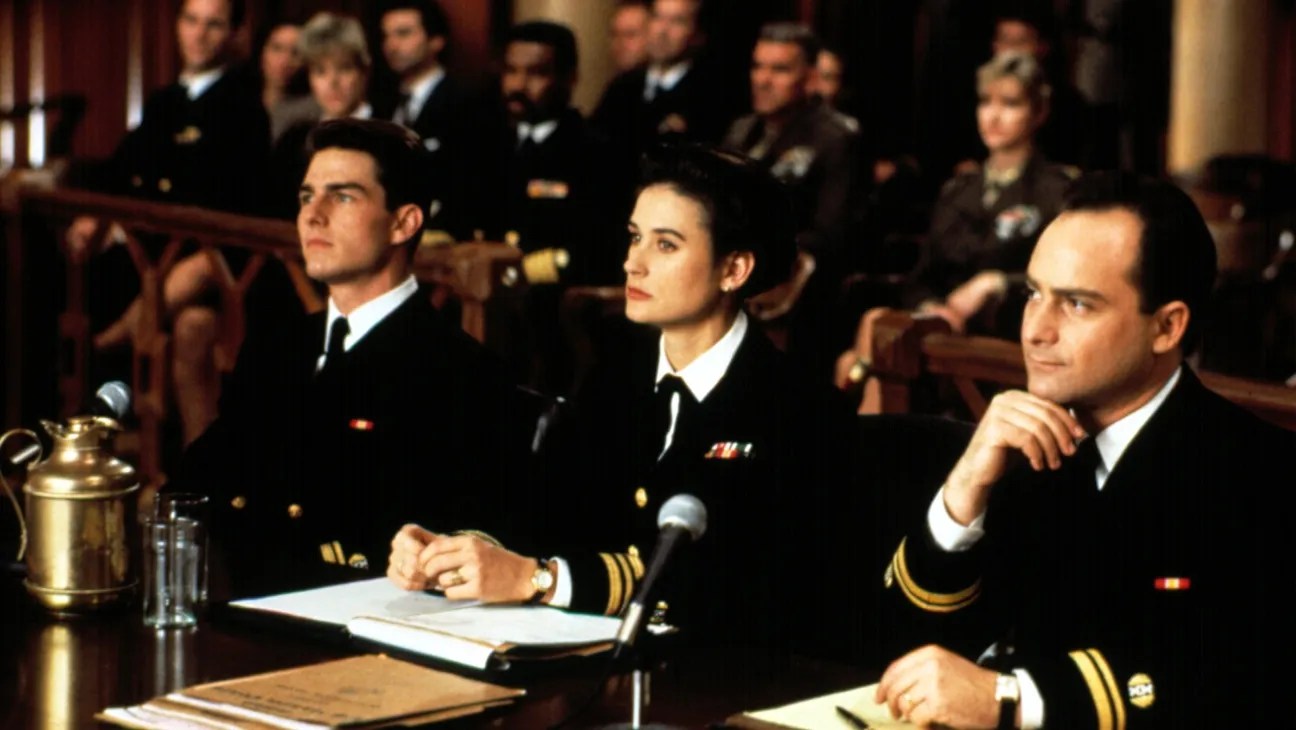
The 20th-century courtroom drama and movie that depicts the court-martial of two US Marines who were accused of killing another US Marine at the Cuban Guantánamo Bay Naval Base – A Few Good Men – may be looked at from a perspective quite divergent from the limelight, from the legal lens. The protagonist Lieutenant Daniel Kaffee, played by Tom Cruise, Lieutenant Commander Joanne Galloway, played by Demi Moore, and Lieutenant Sam Weinberg, played by Kevin Pollak, represent Lance Corporal Harold W. Dawson and Private First Class Louden Downey, who otherwise face dishonorable discharge from the United States Marine Corps. The trial presents institutionalism blinding even the most courageous people whilst forcing them to believe in a “code” that, most of the time, supersedes personal morality – sometimes with dire consequences.
“The devil and the god are in the details”, and the film truly lives up to the narrative as the piece contains and elaborates on such latent aspects of international law that are not discernible to the common movie fan’s eye. The author makes a case for the existence and analysis of such aspects of Public International Law (PIL) like jurisdiction, state responsibility, human rights laws, and treaty law.
Exploring ‘jurisdiction’
Jurisdiction concerns the power of the state to affect people, property and circumstances and reflects the basic principles of state sovereignty, equality of states and non-interference in domestic affairs. In the context of the movie and its narrative centered at the Guantanamo Bay Naval Base, the concept of State jurisdiction under international law is multifaceted and intricately woven into various elements of the plot. The first dimension involves the extraterritorial application of the laws of the United States. The Maastricht Principles on Extraterritorial Obligations of States in the Area of Economic, Social and Cultural Rights have helped clarify the exercise of a State’s powers on another sovereign State. Principle 9, on the scope of jurisdiction, states that jurisdiction may be exercised by a State on situations over which first, it holds effective control or authority, secondly, the State’s acts or omissions result in reasonably foreseeable consequences for the exercise of economic, social, and cultural rights both inside and outside its borders, and third, the State may exercise decisive influence or take action to realize economic, social, and cultural rights extraterritoriality in compliance with international law, either independently or jointly, through its legislative, judicial, or executive branches.
Guantanamo Bay, situated in Cuba, raises questions about the extension of the jurisdiction of the United States beyond its territorial borders. International law acknowledges a State’s authority over its nationals abroad, but the specifics are contingent on agreements with the host country. In the case of Guantanamo Bay, the legal status of the base and the rights of U.S. military personnel may be influenced by treaties or Status of Forces Agreements (SOFA) between the United States and Cuba. The SOFAs are pivotal in determining jurisdictional issues at military bases, given that they establish the legal status of foreign military personnel within the host country and delineate the rights and responsibilities of both the host country and the visiting military, including matters related to jurisdiction.
The existence and terms of an SOFA between the U.S. and Cuba would significantly impact the application of American laws and the exercise of jurisdiction at Guantanamo Bay. The central legal conflict in the movie unfolds within the U.S. military justice system, shedding light on the coexistence of military and civilian jurisdiction. While military authorities traditionally have jurisdiction over offenses committed by military personnel, the movie suggests that this jurisdiction is not absolute. The intersection of military and civilian jurisdiction becomes apparent, especially when offenses have broader implications or occur within the sovereign territory of a host country.
The diplomatic implications and international relations associated with the U.S. exercising jurisdiction at Guantanamo Bay add another layer to the discussion. The movie subtly explores the potential consequences of military actions on foreign soil and their impact on diplomatic considerations. Although the facility is officially on Cuban territory, the United States has sole jurisdiction and control over it. This raises issues of sovereignty and responsibility as it implies that the United States is responsible for events that occur on foreign territory under its control.
Effective control, diplomatic and consular cases, “extraterritorial effects” cases, and expulsion cases are all contingent upon the State exercising a form of functional sovereignty, which indicates that the State is always performing functions in the territory of another State that are typically connected to the actions of a sovereign State on its own territory. Such a form of extraterritoriality may be deduced from the “effective control test” The killing of Santiago while under American command at Guantánamo serves as an example of how American activities there might impact relations with Cuba and, more generally, how international law requires the United States to answer for its military actions abroad. The interconnectedness of state jurisdiction with diplomatic and foreign policy considerations becomes evident, emphasizing the delicate balance between asserting legal authority and maintaining positive international relations.
The Question of State Responsibility
The film does not stop at jurisdiction. ‘State responsibility’ is a fundamental principle of international law, arising out of the nature of the international legal system and the doctrines of State sovereignty and equality of states. It provides that when a State commits an internationally unlawful act against another, the perpetrator State attracts what is known as ‘State responsibility’ for committing an internationally wrongful act [ARSIWA]. A breach of an international obligation gives rise to a requirement for reparation. The notion of State responsibility within the framework of international law, encompassing the State’s duty to uphold standards and ensure accountability for its agents, is prominently highlighted in the film at the Guantanamo Bay Naval Base.
The central theme of command responsibility reflects the overarching international legal principle that holds states accountable for the actions of their agents, particularly military officers, compelling them to prevent or penalize misconduct by subordinates. This concept finds mention under Article 28 of the Rome Statute of the International Criminal Court, 2002 or the ICC Statute. The film’s depiction of alleged hazing and abuse raises concerns regarding human rights, raising a crucial question: Does the factual matrix of the film raise questions on state responsibility?
Although the film emphasizes the need to prevent and address violations occurring within its jurisdiction, it fails to meet the necessities of establishing ‘state responsibility’ which, under Article 2 of the ARSIWA, require the fulfillment of various essentials like: conduct which consists of an action or omission; conduct that is attributable to the State under international law; and conduct that constitutes a breach of an international obligation of the State. In the film, Colonel Jessup’s illegal Code Red order was issued by a military officer. The Navy further allowed the systematic practice of hazing and failed to protect Santiago despite his numerous requests for transfer. The breach was made worse by senior officers’ attempts to conceal it. In the end, Santiago’s death while being held raises issues of U.S. state culpability under international law since it is a breach of the right to life. While Santiago’s death may be attributed to the United States Navy, the act was not committed on another sovereign State.
Thus, acts of abuse and mischief occurred within the military contingent of the United States and not against a sovereign State, hence escaping the purview of state responsibility. Nevertheless, while the focus is primarily on internal military operations at Guantanamo Bay, the narrative underscores the broader international law principle that States are accountable for the conduct of their armed forces, even in foreign territories, as understood under International Humanitarian Law and Part III of the Geneva Convention Relative to the Protection of Civilian Persons in the Time of War, 1949. The application of American laws beyond national borders introduces complexities, suggesting that the United States, as the implicated state, could be held responsible for Transnational State Responsibility for Violations of Human Rights committed by its military personnel. Thus, the movie in a way underscores the intricate nuances of state responsibility [its inapplicability], command authority, human rights considerations, and the application of laws in a transnational context.
The ‘Human Rights’ Perspective
As the film centers around the setting up of a US detention camp wherein a United States Marine is beaten up, abused and killed at Guantanamo Bay, it raises issues of human rights and treatment of detainees. Questions surrounding ‘the International Protection of Human Rights’ are, in fact, a theme that has very often been explored in cases before the ICJ as well as academics like Malcolm N Shaw. Further, it goes unsaid that such human rights include and extend to war veterans, prisoners, and active and wounded soldiers. In fact, “Recognition of the inherent dignity and the equal and inalienable rights of all members of the human family is the foundation of freedom, justice, and peace in the world,” the preamble to the Universal Declaration of Human Rights, which was adopted on December 10, 1948, emphasizes concern over the care of injured and sick troops as well as prisoners of war emerged in 1864 as a result of an international document requiring governments to treat foreign nationals according to a set of minimal requirements.
Human rights of ordinary persons, prisoners, and military men of various nations have become recognized and have been enforced through the United Nations System through organizations like the International Criminal Court, the Security Council, the Department of Peace Operations (Protection of Civilians) Policy, and others. Such a system would condemn the abuse and killing of Private William Santiago (who is a naval officer) by Lance Corporal Harold Dawson and Private First Class Louden Downey in the middle of the night in Guantanamo Bay. As stated before, the concept of international law, as opposed to domestic law, arises as there are two sovereign nations at play – The USA and Cuba (Guantanamo Bay), and the atrocities that occurred involved the interplay of both republics. To deal with the death of Private William Santiago, a court-martial was conducted, and the two accused were tried and then convicted.
Thus, it becomes important to understand how Public International Law views Martial Law. It is viewed as a matter of convention and as a final option for nations. The laws get complicated when there are governments engaged in international conflict. The ICJ’s manual, which lists 17 instances in which it finds Martial Law to be fundamentally violating human rights under Article 14 of the International Covenant on Civil and Political Rights and guarantees every human being an unbiased trial, is the source of the martial law’s origins and tumultuous history. That being said, it is essential to note that although the central theme does not involve the concept of enforcing human rights by an authorized international body, the UN has evolved practices in this regard. For example, adopted in 1993, the Vienna Declaration and Program of Action underlined the universal, indivisible, interdependent, and linked nature of all human rights. Human rights protection was considered a top priority for the UN, given the importance of democracy, growth and observance of fundamental freedoms and human rights.
Pactum Sunt Servanda – Law of Treaties
The movie’s context, by extension, also encapsulates the law that governs treaties in Public International Law. Much like the ongoing war between Russia and Ukraine, other warring and even peaceful nations are encouraged to follow the basic principles of war and treaties related to war, like the Geneva Convention of 1949 and the Protocol Additional to the Geneva Conventions of 12 August 1949 relating to the Protection of Victims of International Armed Conflicts (Protocol I), 8 June 1977, and the Hague Convention of 1907, which navigate the means and methods of warfare, and the regulations governing basic humanitarian law. Furthermore, forbidden by the laws of war in such treaties are random and indiscriminate attacks. Strikes that lack a clear military purpose or employ weaponry that cannot be targeted at a specified military objective are examples of indiscriminate strikes. Although there is no specific treaty on the protection of military personnel, there do exist treaties that address aspects of humanitarian law. Cases in point, Convention Against Torture and Other Cruel, Inhuman, or Degrading Treatment or Punishment of 1984, the International Covenant on Civil and Political Rights of 1966, etc. They forbid the use of torture and other harsh, barbaric, or demeaning methods of punishment or treatment. These treaties apply to everyone, even members of the armed forces. Additionally, they also guarantee freedom from torture and other civil rights.
Conclusion
The film may have many aspects. In fact, the essence of the film is that of a lawyer who is initially under-confident but eventually grows to live up to his father’s legacy. However, this piece attempts to understand the film from the perspective of PIL by analyzing the film and aspects of international law, from jurisdiction to the law of treaties. The author makes a case for connecting the factual context of the film to the above concepts of PIL, while gauging whether they are mentioned, and if not, arguing why. A takeaway is thus, be it Hollywood or legalese, rationality and connection with the law never cease to exist.
Rhea L Vinay and Shambhavi Jha are fourth-year law students at School of Law, CHRIST (Deemed to be University), Bangalore.
Picture Credit: The Hollywood Reporter
 Jindal Forum for International and Economic Laws