
When the fifty-ninth session of the UN Commission on International Trade Law (‘UNCITRAL’) closed in New York on 10 July 2026, something historic had occurred. For the first time since states mandated Working Group III in 2017 to reform Investor-State Dispute Settlement (‘ISDS’), a comprehensive set of texts for the post-arbitration era was on the table. This included supplementary procedural rules, draft statutes for permanent first-instance and appellate tribunals, and a multilateral instrument to bring all of this into the roughly 2,500 investment treaties in force. This post argues that the flexible two-statute system may bring more states, but that enforcement remains its weak point.
From Reform Ideas to Draft Rules
At its fifty-third session in January 2026, Working Group III agreed to consolidate its draft procedural provisions into a single set of Supplementary Provisions. These were drafted in treaty language so that they can supplement the UNCITRAL Arbitration Rules, be incorporated into the proposed Multilateral Instrument on ISDS Reform (‘MIIR’), or be used by a future standing dispute settlement body.
As the Secretariat noted, this approach draws on the Mauritius Convention on Transparency, which allowed new transparency rules to apply to existing investment treaties through a one-time multilateral opt-in. Two months later, at its fifty-fourth session in March, Working Group III took up two draft statutes, for a Permanent Tribunal for International Investment Disputes (WP.259) and a Permanent Appellate Tribunal (WP.260), along with an EU submission on jurisdiction. For years, observers had noted the gap between Working Group III’s ambitious reform agenda and its outputs, but in March 2026 those ambitions finally took legal form.
A Flexible Model Instead of One Court
Since the mid-2010s, the European Commission has pushed the EU’s long-standing proposal for a single two-tier Multilateral Investment Court. The March 2026 outcome, however, shows a more flexible approach, with two separate draft statutes instead of one unified court, each of which operates independently and allows states to join the first-instance tribunal, the appellate tribunal, both, or neither.
Many states that see party appointment as a defining feature of arbitration are unlikely to accept a permanent first-instance tribunal, but they may be willing to support an appellate mechanism to review arbitral awards. An appeal tier addresses the main complaint behind the reform, i.e. inconsistent and incorrect decisions, while leaving the parties’ choice of arbitrators intact. Indeed, the March report notes that separate statutes would let states wanting appeals against arbitral awards join the appellate tribunal alone (para 99). States that favor a permanent court, meanwhile, can join both statutes and establish a two-tier judicial system inter se. Importantly, because the appellate tribunal can also review ordinary arbitral awards, it is much more than an extension of the court project and could gradually reshape the existing ISDS system.
Of the many challenges the March report points out, first is that “uncertainty might arise regarding the recognition and enforcement of awards subject to appeal when the Statute of the Appellate Tribunal had not yet entered into force” (report: para 65), which is a serious risk if the statutes take effect at different times. The second is whether appeal should be the exclusive remedy (report: paras 107-108), replacing mechanisms such as ICSID annulment and domestic set-aside proceedings, which would be hard to achieve without consent from every state whose courts would otherwise have jurisdiction.
Can the New System’s Decisions Be Enforced?
One of the greatest strengths of the current ISDS system has never been arbitration itself, but the way its awards are enforced. ICSID awards are protected from review by national courts (Article 53) and enforceable in every Contracting State as if they were final domestic judgments (Article 54). Other awards benefit from the 1958 New York Convention, which obliges Contracting States to recognize and enforce them (Article III), subject only to the limited grounds in Article V. Any future ISDS system must therefore either build on these mechanisms or create an equally effective alternative. However, it is on this issue that the drafts appear most fragile.
ICSID leaves execution to local law and expressly preserves immunity from execution (Articles 54(3) and 55), while the New York Convention ties enforcement to local “rules of procedure” (Article III). In the CC/Devas litigation, India’s immunity plea failed in Canada, but the High Court of Australia and, in June 2026, the English Court of Appeal held that ratifying the New York Convention is not itself a waiver of immunity. The drafts copy ICSID’s enforcement provision and leave execution to local law (WP.259, Article 23(5)), and the March report records a proposal to preserve immunity from execution, like ICSID Article 55 (report: para 127). So, relying on the existing system would, therefore leave the immunity problem unresolved, unless states expressly waive it.
The ICSID Convention offers annulment rather than appeal (Article 52), and Article 53 rules out “any appeal.” An appellate mechanism for ICSID awards would therefore require modifying the Convention’s operation (paras 9-11) between only some of its Contracting States. Such an inter se modification (para 12) must meet Article 41 of the Vienna Convention on the Law of Treaties. Since ICSID does not provide for it, the change must not be prohibited, affect other parties’ rights or undermine the treaty’s object and purpose. Article 53 seems like exactly such a prohibition, although Brian McGarry and Josef Ostřanský argue that it binds the disputing parties, not states modifying the Convention. If these conditions are not met, the modification is not automatically void, but participating states could incur international responsibility toward other ICSID parties (ICSID note: para 13), so the uncertainty is itself a litigation risk.
The alternative way through the New York Convention has two problems of its own. First, the Convention covers awards of “permanent arbitral bodies” (Article I(2)), but courts outside the new system may not see a treaty-based tribunal of state appointed judges as one. As Marike Paulsson has argued, the drafting history of Article I(2) makes voluntariness the test, so a body with compulsory jurisdiction is a court, whatever its name. A permanent tribunal may meet this requirement, since investors choose to sue and states opt in treaty by treaty, but it might struggle on party autonomy, as neither side picks the judges. The drafts simply deem decisions “arbitral awards,” but yet the statute cannot bind non-Contracting Parties (report: paras 123-124). Second, an award under appeal may no longer be “binding” for enforcement purposes (Article V(1)(e)).
In practice, at least early on, the new judgments are likely to circulate with confidence only among states that join the system. In practice, at least early on, the new judgments are likely to circulate with confidence only among states that join the system. This is a reversal of one of ISDS’s original strengths, i.e. broad and predictable enforceability across jurisdictions.
For the EU, however, the two draft statutes offer a way forward. Under Articles 267 and 344 of the Treaty on the Functioning of the European Union, only courts within the EU judicial system, led by the Court of Justice (CJEU), may interpret EU law with binding effect. Because arbitral tribunals can do this but cannot refer questions to the CJEU, the Court ruled in Achmea and Komstroy that intra-EU investment arbitration is incompatible with EU law. In Opinion 1/17, by contrast, it endorsed CETA’s investment court, partly because that court could consider EU law only as a matter of fact. Thus, a standing tribunal with similar limits seems to align with the EU’s long-standing reform agenda, but for many other states, it remains an ambitious experiment.
More Flexibility, More Challenge
The reform began mainly because tribunals reached different results in similar cases, yet its chosen tool, an à la carte framework from which each state picks what it wants, brings that divergence back in. Depending on the treaty, a similar dispute could go to ordinary arbitration, arbitration under the Supplementary Provisions, arbitration followed by an appeal, or a full two-tier court. The Mauritius approach explains this choice, as it adds new procedures to existing treaties without renegotiating each one, but the cost is consistency, the very thing the reform set out to fix.
The Mauritius model also matters for transparency, as both drafts apply the same UNCITRAL Transparency Rules and make decisions public (WP.259, Articles 19(4) and 20(6); WP.260, Articles 24(4) and 25(13)). Much of ISDS is currently confidential, but publishing the claims, defenses and judgments would make it public and, over time, build case law that leads to more consistent outcomes. Yet, states have shown little interest in such openness, since more than a decade after its adoption, the Mauritius Convention has only ten parties. Thus, many states that prefer to settle disputes quietly may simply stay with confidential arbitration.
The WTO’s Appellate Body has been paralyzed since December 2019, and an opt-in investment appellate tribunal could face the same risk, although the drafts do provide some safeguards, i.e. long non-renewable terms of office, staggered appointments and collective selection. Thus, what will matter is how many states ratify the new system and stay committed to it. The most likely outcome is a “court of the willing,” with the EU and like-minded states joining first, while others may never participate, although even that would cover a substantial number of investment treaties.
The Next Stage of the Reform Process
The tenth inter-sessional meeting in Ninh Binh, Viet Nam (7-9 September 2026) covered damages, but also issues critical for the two tribunals, i.e. jurisdiction, enforcement of decisions and interaction with the MIIR. The fifty-fifth session of Working Group III (12-16 October 2026) was reserved for the remaining procedural provisions and the damages guidelines, so the statutes should return at the fifty-sixth session in January 2027, with the fifty-seventh in New York in March aiming to finalize the texts for the Commission.
Concluding Remarks
UNCITRAL’s ISDS reform has now moved beyond broad discussions to concrete legal texts. Whether these reforms succeed, however, will depend on how many states choose to adopt the new system and whether its decisions can be enforced as reliably as today’s arbitral awards. Until then, the old and new systems are likely to operate side by side rather than one fully replacing the other.
Madhav Raj Acharya is a B.A.LL.B. Fourth Year student at Kathmandu School of Law, Nepal with Business and International Trade Law as the major subject.
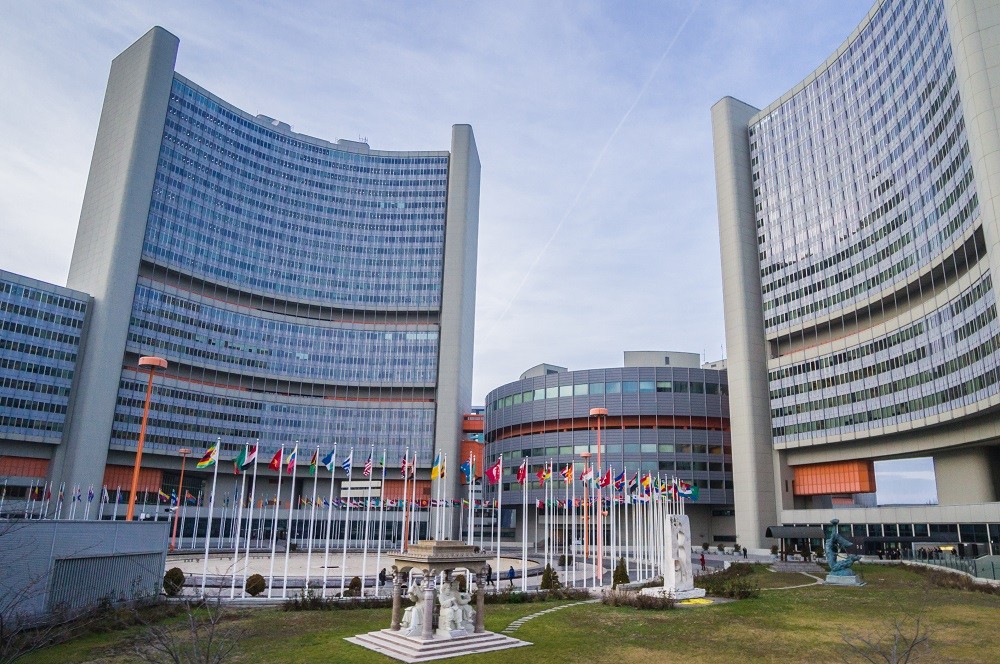
PC: British Institute of International and Comparative Law

