
I. A Question Reopened
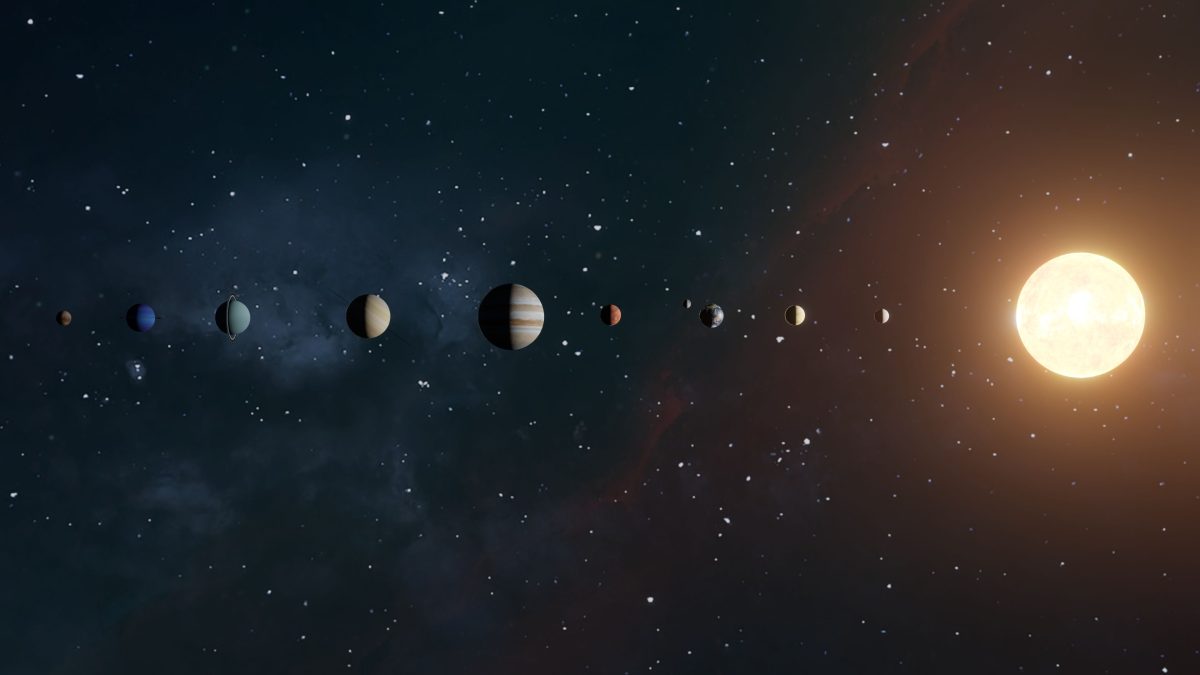
On 28 April 2026, at a Senate Appropriations hearing, NASA Administrator Jared Isaacman said he was “very much in the camp of ‘make Pluto a planet again’” and that NASA was preparing papers to reopen the question. In 2006, the International Astronomical Union (IAU) reclassified Pluto as a dwarf planet. That definition remains in force, but some planetary scientists are considering a revised definition for the IAU’s 2027 General Assembly in Rome.
The legal issue is who determines what counts as a “celestial body”. Neither the 1967 Outer Space Treaty (OST) nor the 1979 Moon Agreement defines the term or gives any scientific institution authority to do so. I argue that it is an autonomous legal term, determined through treaty interpretation rather than by astronomical classification. Otherwise, a vote among astronomers could change the reach of Article II OST, which bars national appropriation of celestial bodies, without any decision by the treaty parties. The distinction matters little for Pluto but considerably more for small asteroids. If those objects remain celestial bodies irrespective of size, Article II OST has to be read as distinguishing between extracting their resources and appropriating the bodies themselves.
II. The Legal Framework
Article I OST declares outer space, “including the Moon and other celestial bodies”, free for exploration and use by all States. Article II OST provides that outer space, including the Moon and other celestial bodies, “is not subject to national appropriation by claim of sovereignty, by means of use or occupation, or by any other means”.
Because the OST does not define the term, its interpretation is governed by the customary rules reflected in Articles 31 and 32 of the Vienna Convention on the Law of Treaties (VCLT). Article 31 VCLT requires a treaty to be read in good faith according to the ordinary meaning of its terms, in context and in light of its object and purpose. Any agreement the treaty parties reach after its conclusion on how it is to be interpreted must also be taken into account, as must their subsequent practice in applying it where that practice establishes such agreement (Article 31(3)(a) and (b) VCLT). A term has a “special meaning” only if the parties intended it (Article 31(4) VCLT), and the negotiating record may confirm a meaning or resolve ambiguity (Article 32 VCLT).
The text and context of the OST support treating a “celestial body” as a naturally occurring, physically discrete body in outer space. Professor Jinyuan Su reaches a similar conclusion, regarding asteroids and comets as covered irrespective of size and noting that the drafters knew of asteroids. Jack Heise likewise rejects limiting “the Moon and other celestial bodies” to Moon-like objects, since some moons are probably captured asteroids. The text adds no requirement as to size, shape, orbital dominance or removability. It therefore covers Pluto and does not exclude asteroids merely because they are small or movable.
III. Should Science Decide?
States have debated where “outer space” begins since 1967 without agreeing. A scientific definition of “celestial body” would seem neutral and stable, and international law relies on experts elsewhere.
The UN Convention on the Law of the Sea (UNCLOS) illustrates the difference between consulting science and deferring to it. Its definition of the continental shelf entitles every coastal State to at least 200 nautical miles irrespective of seabed geology (Article 76(1) UNCLOS). Su uses this example to show that legal terms may depart from their physical counterparts. Where UNCLOS does give science a role, it creates a body for that purpose, the Commission on the Limits of the Continental Shelf, whose recommendations form the basis of limits that are “final and binding” (Article 76(8) UNCLOS). The OST, by contrast, mentions neither the IAU nor any other scientific organ.
Any scientific criterion, whether size, shape or another physical characteristic, would itself decide which objects fall within the prohibition on appropriation in Article II OST. In Kasikili/Sedudu Island (1999), the parties submitted competing hydrological evidence on the river’s “main channel”. The International Court of Justice (ICJ) assessed that evidence, but the meaning and application of the treaty remained for the Court. In Whaling in the Antarctic (2014), the Court likewise heard experts but itself decided whether Japan’s programme was “for purposes of scientific research”. The Working Group on Legal Aspects of Space Resource Activities of the UN Committee on the Peaceful Uses of Outer Space (COPUOS) follows the same division of labour: it seeks scientific input, while States negotiate the legal principles. Astronomy can establish the physical characteristics of Pluto or an asteroid. It cannot determine the legal scope of Article II OST.
IV. The Limits of an IAU Vote
An IAU resolution is neither a subsequent agreement nor subsequent practice under Article 31(3) VCLT, both of which depend on the conduct or agreement of the treaty parties. In its 2018 conclusions on subsequent agreements and practice, the International Law Commission (ILC) confirms that conduct of non-State actors does not itself constitute subsequent practice, although it may be relevant when assessing the practice of the parties (Conclusion 5(2)). Conclusion 13(3) recognises that pronouncements of expert bodies established under a treaty may give rise to, or refer to, subsequent agreement or practice of the parties. The IAU, a non-governmental scientific union, is not such a body.
Nor does Article 31(4) VCLT turn astronomical terminology into a special treaty meaning. In Legal Status of Eastern Greenland (1933), the Permanent Court of International Justice gave “Greenland” its ordinary geographical meaning and placed the burden of proof on the party alleging an unusual meaning. The ILC endorsed that burden in its 1966 commentary on what became Article 31(4) VCLT. Nothing in the OST negotiating record suggests an intention to incorporate an astronomical taxonomy. The IAU does not supply one today either: Resolution B5 uses “celestial body” within its definitions of “planet” and “dwarf planet” without defining the term itself, as David A. Epstein notes.
An autonomous treaty meaning need not, however, remain fixed at its 1967 content. In Navigational Rights (2009, para 66), the ICJ held that generic terms in treaties of continuing duration may be presumed to carry an evolving meaning, and ILC Conclusion 8 recognises that subsequent agreements and practice may assist in determining whether such evolution was intended. Any such evolution must nevertheless be traced to the parties and cannot rest on an external scientific classification. The Artemis Accords offer some evidence of current State usage: their scope covers “the Moon, Mars, comets, and asteroids” and refers to transit “between these celestial bodies”. That usage supports, without establishing for all OST parties, a reading that includes asteroids and comets.
V. Pluto as a Test Case
Pluto, a large natural body with moons, is a celestial body on any ordinary reading, and any IAU reclassification would leave Articles I, II and IX OST applying to it. The lower boundary of the term is less certain. States may disagree about which small objects Article II OST covers, and Professor Yutaka Osada warns that national legislation adopted while multilateral talks stall may itself shape the OST’s development. Pluto does not test that boundary. Small bodies do, particularly where technology makes it possible to capture or move them as a whole.
VI. Small Bodies
Three positions recur in the literature. Su treats natural bodies as covered irrespective of size and adds that narrowing the category would require amendment under Article XV OST. Dr Diego Zannoni proposes a technology-dependent distinction that excludes objects capable of being controlled or transported as a whole. The severance approach instead distinguishes the body from its resources: Article II OST protects the body, while removed material may be owned. Chelsey Davis and Professor Mark Sundahl describe severance as the view of most experts.
A technology-dependent definition would make the scope of Article II OST vary with engineering capacity: an asteroid protected today would lose that protection once a spacecraft could tow it. As with deference to IAU taxonomy, the legal boundary would then move without any interpretive decision by the treaty parties.
The Moon Agreement provides textual support for the severance approach. Article 11(3) bars property rights in the Moon’s surface, subsurface and natural resources “in place”, while Article 6(2) permits States Parties to collect and remove samples, which remain at their disposal. These provisions do not establish commercial ownership, but they distinguish resources in place from removed material. Dust and loose particles may likewise be treated as removed material rather than as “bodies”. The Moon Agreement cannot determine the OST’s meaning for non-parties, so its relevance is interpretive, and Zannoni treats it as a supplementary means under Article 32 VCLT. A similar distinction appears in the US Commercial Space Launch Competitiveness Act, Article 1 of Luxembourg’s 2017 law and Section 10 of the Artemis Accords, each of which permits resource extraction without claiming the body itself. These instruments do not bind other OST parties, but they show States drawing the line where the severance approach draws it.
The distinction becomes more difficult where a small body is captured or consumed in its entirety. Nothing is severed, and the body itself comes under exclusive control. Dr Philip De Man treats such consumption as an exercise of the freedom of use and not as appropriation. Article II OST, however, lists “use” among the means of appropriation, so calling an activity a use does not make it lawful. The better view is Su’s distinction between extracting material from a body and appropriating the body itself, because Article II OST protects the celestial body and not the material taken from it. Mining a small asteroid may therefore be permissible even where capturing or consuming it as a whole is not. National legislation alone could not make the capture of an entire celestial body compatible with Article II OST.
VII. What COPUOS Can Do
The UN space treaties have developed with little formal amendment. COPUOS has also used consensus instruments to clarify existing treaty concepts, including General Assembly Resolution 59/115 on the “launching State”. The Working Group, which has circulated initial draft principles since 2025, offers a forum for similar work. A 2025 version already flagged the possible destruction of a celestial body for further consideration, as Dr Güneş Ünüvar reports.
A future principle could distinguish extraction from appropriation of the body: ownership may extend to material removed from its place, but the freedom of use would not justify taking exclusive control of an entire celestial body. Such a principle could be framed as a clarification of Article II OST rather than as a new limitation on its scope. A fixed size threshold would be harder to present as clarification, because it would exclude some natural bodies from the term. Amendment under Article XV OST would give it a firmer basis (compare ILC Conclusion 7(3)). Consensus adoption alone would not give such a text interpretive status. If the OST parties endorsed it in terms showing a common understanding of Article II OST, however, it could provide evidence relevant to Article 31(3)(a) VCLT.
VIII. Conclusion
Pluto’s astronomical classification does not determine whether Articles I and II OST apply to it. The more consequential issue is how Article II OST applies to small natural bodies capable of being captured or consumed in their entirety. The better reading distinguishes ownership of extracted resources from appropriation of the body itself. COPUOS could reduce the remaining uncertainty by making that distinction explicit.
Moritz Hieronymi, Dipl.-Iur. (EUV), LL.M. (BIT), is a PhD candidate in outer space law at Beijing Institute of Technology and in international law at European University Viadrina, where his research focuses on international space law, frequency regulation, and cislunar infrastructure policy.
PC: Pexels/Zelch Csaba

