
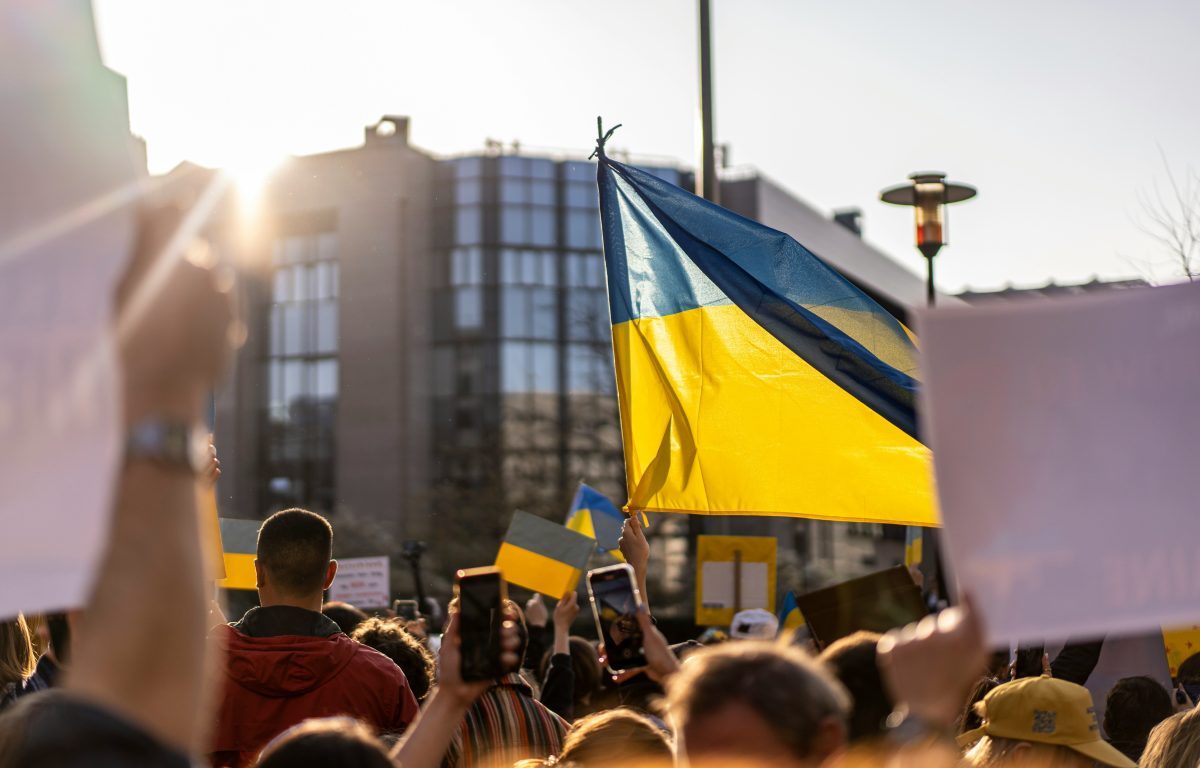
On June 25, 2025 the Council of Europe and Ukraine signed an agreement to establish the Special Tribunal for the Crime of Aggression Against Ukraine (‘the Tribunal’). The Tribunal is set up within the aegis of the Council of Europe to prosecute and attach individual criminal responsibility for individuals responsible for Crime of Aggression against the State of Ukraine [See Article 4 of the Statute of the Special Tribunal for the Crime of Aggression Against Ukraine dated June 24, 2025]. Under International Law, the Crime of Aggression is known as a supreme international crime and its definition is borrowed from the General Assembly Resolution 3314 requiring a ‘manifest violation of the UN Charter,’ as perpetrated against the sovereignty, territorial integrity or political independence of another state. This definition also finds place as under Article 8 bis of the Rome Statute.
While the Russian commission of the Crime of Aggression is acknowledged and condemned by the international community via its General Assembly Resolution ES-11/1 and therefore, the establishment of the Tribunal remains laudatory; the Statute of the Special Tribunal for the Crime of Aggression Against Ukraine dated June 24, 2025 (‘the Tribunal Statute’) calls to question the applicability of internationally recognised human rights from a referencing point of the accused. Such a provision provides an explicit interpretative framework, requiring ambiguities to be resolved consistently with internationally recognised human rights. Its omission does not preclude reliance upon such norms, but leaves their application to judicial discretion rather than statutory obligation, a concern heightened by the Tribunal’s politically sensitive mandate and corresponding need to preserve institutional legitimacy and confidence in its proceedings. This limit is present in Article 21(3) of the Rome Statute which obliges an overarching mandate of protection of human rights and attempts to limit judicial discretion. By omitting the reference to a provision akin to 21(3), the Court risks handling too much discretion to choose, to refer or ignore human rights, absent an overarching interpretative mandate.
I. The Applicable Law Clause and the omission of International Human Rights
Article 3 of the Statute underlays the applicable law clause for the tribunal. It proscribes that the Special Tribunal shall apply, in the first place, the Statute and the Rules of Procedure and Evidence, in the second, applicable treaties, Customary International Law (CIL) and general principles of law and failing that, provisions of subsitantive criminal law of Ukraine. It, therefore, privileges a hierarchy divided into three pyramids, akin to Article 21 of the Rome Statute. In doing so and borrowing heavy inspiration from the Rome Statute, even in terms of its usage in terminology, the Ukrainian Statute omits any reference to human rights, which is an important consideration especially for an accused before a criminal tribunal. Article 21(3) of the Rome Statute explicitly proscribes that the application and interpretation of law must be in consonance with internationally recognised human rights. In fact, the ICC Appeals Chamber in Lubanga OA 4 Judgement, has categorially opined that Article 21(3) lays the foundation and basis for interpreting any provision under the Rome Statute.
As such, the authors argue that privileging a hierarchy as is done by the applicable clause without allowing for a reference to human rights remains problematic. While the Tribunal Statute does provide for adequate safeguards, a provision for internationally recognised human rights allows the Court to substantively elaborate and read internationally important human rights that have not yet developed substantially or agreed to be CIL, into its jurisprudence.
A relevant reference for elaboration can be drawn from Article 28 of the Tribunal Statute which allows for in absentia trial of the accused. The authors, herein, do not question and engage with the discourse on the legitimacy or illegitimacy of such a provision given it receives its fair share of human rights critique but merely want to highlight that when such a mechanism of in absentia was adopted by the ICC in Joseph Kony; subsequently, the ICC Appeals Chamber in Ruto and Sang OA5, was able to interpret this mode of trial in a more human rights compliant fashion given the underlying obligation it was bound to under Article 21(3). It is as such, this obligation that allows scholars such as Mischa Hall to argue that the remedy of such exercise of in absentia trials by an International Criminal Court must be with respect to a right to a retrial, which must be extended to the confirmation stage, such that it ensures the equal rights of the accused in the proceeding without creating prejudice. To recall, while Article 28 of the Tribunal Statute does provide for a right to re-trial, it omits any reference to such a right being extended to a confirmation stage and it is otherwise difficult to incorporate/read into given the absence of such underlying obligation to interpret the statute (akin to an Article 21(3) clause). As is acknowledged, the possibility of even advocating for the remedy to be extended to a confirmation stage occurs owing to the presence of Article 21(3) and the obligation it brings before the court. The importance of the presence of such a clause is also recognisable from the fact that it mandates the Court to both, read into and omit/preclude the application of any provision of the Rome Statute and its concomitant Rules of Procedure if they so require, which would be an important instrument to read rights for stakeholders even beyond the accused. As such, privileging a hierarchy, (which for all purposes seems to overwhelmingly draw inspiration from the Rome Statute) while omitting such a clause allows for a very selective approach to interpretation.
As such, the authors now aim to provide for alternate instruments that the Special Tribunal may apply to advance a more human rights compliant interpretation and rules of law that provide an overarching human rights complaint obligation akin to Article 21(3). The Council of Europe Committee of Ministers during its 1532nd meeting, as held on 18th and 24th June, 2025, discussing the Tribunal Statute, explicitly proscribed — “Attaching the greatest importance to due process and fair trial standards, including the principles of ‘nullum crimen sine lege’ (one cannot be prosecuted for a crime that does not exist) and ‘ne bis in idem (principle of double jeopardy)’, in accordance with international and European human rights standards.”
It would seem, therefore, that the Statute’s omission contradicts the reference made in the agreement. A similar case emerged before the ICTY in its 15th July 1999 Judgement in Dusko Tadic, where the Secretary General’s report, which suggested the codification of crimes against humanity, was approved by the Security Council and as such, formed an explanatory document to the ICTY Statute. Therein, in the presence of such contradiction with respect to the scope of Article 5 of the ICTY Statute, the Court held that in instances of such contradiction, a literal application of the statute would take precedence. Such a rigid interpretation, if also, relied on by the Special Tribunal, may not help in advancing human rights given the presence of privileged position accorded already to the Statute as per Article 3. There is also enough precedent in International Criminal jurisprudence, as is argued by scholars, that reflect a shifting standard from the interpretation in Tadic. This shifting paradigm can also be made known from the ICTY’s own earlier judgment of 16th November, 1998 in Delalic, where it stated, drawing from the Common Law principle, that where a word leads to absurdity, a court must disregard a literal meaning.
It can also be argued that Article 31 of the VCLT provides an avenue of advancing human rights for the Tribunal. Article 31(2) of the VCLT provides that ‘context’, as referred in Article 31(1) refers to a treaty’s preamble and annexures. This has also been adopted by the ICTY in its interpretation in Delalic. Similarly here, the aforementioned statement can be found in the Preamble to the Agreement between the Council of Europe and the State of Ukraine which establishes the Special Tribunal. The tribunal may also apply Article 32 of the VCLT, in the determination under Article 31, herein the travaux, to invoke a recognition of ‘international standards of human rights.’ Such references to VCLT are exorbitant and consistent in international criminal law jurisprudence. As such, invoking a human rights compliant interpretation may not seem that arduous for the Tribunal to invoke. One may also argue that given Ukraine’s membership to the European Convention on Human Rights (‘ECHR’), the application of ECHR would be independent of the hierarchy clause, given the proximate nexus of the State of Ukraine and the Special Tribunal, drawing from the responsibilities of a contracting party to enter treaties and agreements. [ECHR decision in Matthews and Bosphorus].
Furthermore, the ICTY has otherwise read into the Statute where doing so was required owing to an omission. In Simic, Decision on Motion for Judicial Assistance to be Provided by SFOR, the court held that the mere fact that Article 29 remains confined to states and is not extendable to collective enterprises does not allow laying acquiesce to an interpretation which does not conform with human rights. This reading was done in pursuance of the objects and purposes of the Statute. Such an interpretation is crucial for the Tribunal, not only because the ICTY also lacked a reference to human rights as found under Article 21(3), but also because its own statute consistently provides for rights of the accused [See Article 16 – 20 of the Tribunal Statute]. As such, to read human rights into applicable law would only be in pursuance of its objects and purposes.
II. Conclusion
Therefore, the omission of a human rights interpretative clause becomes problematic, as it accords a high degree of judicial discretion without an overarching obliging mandate. While such is the case, the authors alternatively, try to gauge for alternative legal instruments that perforce the same obligation upon the court.
Meraj Ahmad and Deetya Agarwal are a fourth-year and a third-year student, respectively, at the National University of Juridical Sciences, Kolkata.
Picture Credit: Unsplash / Anastasiia Krutota

