
Introduction
Our world is rapidly urbanising. This growth is projected to increase from 56% in 2021 to 68% in 2025, translating to 2.2 billion urban residents, out of which the majority will live in Asia and Africa. By 2035, more than 40% of India’s population would live in cities. Migration is the sine qua non of our urban futures. This trend is also accompanied by deepening urban fragilities characterised by climate risks, income inequalities, informalisation and housing crisis. Upon recognising the global roots of these local challenges, local/urban governments around the world are representing and advocating for the rights of their inhabitants at the global stage to effectively localise their solutions, attaining the status of ‘legal actors’ in international law.
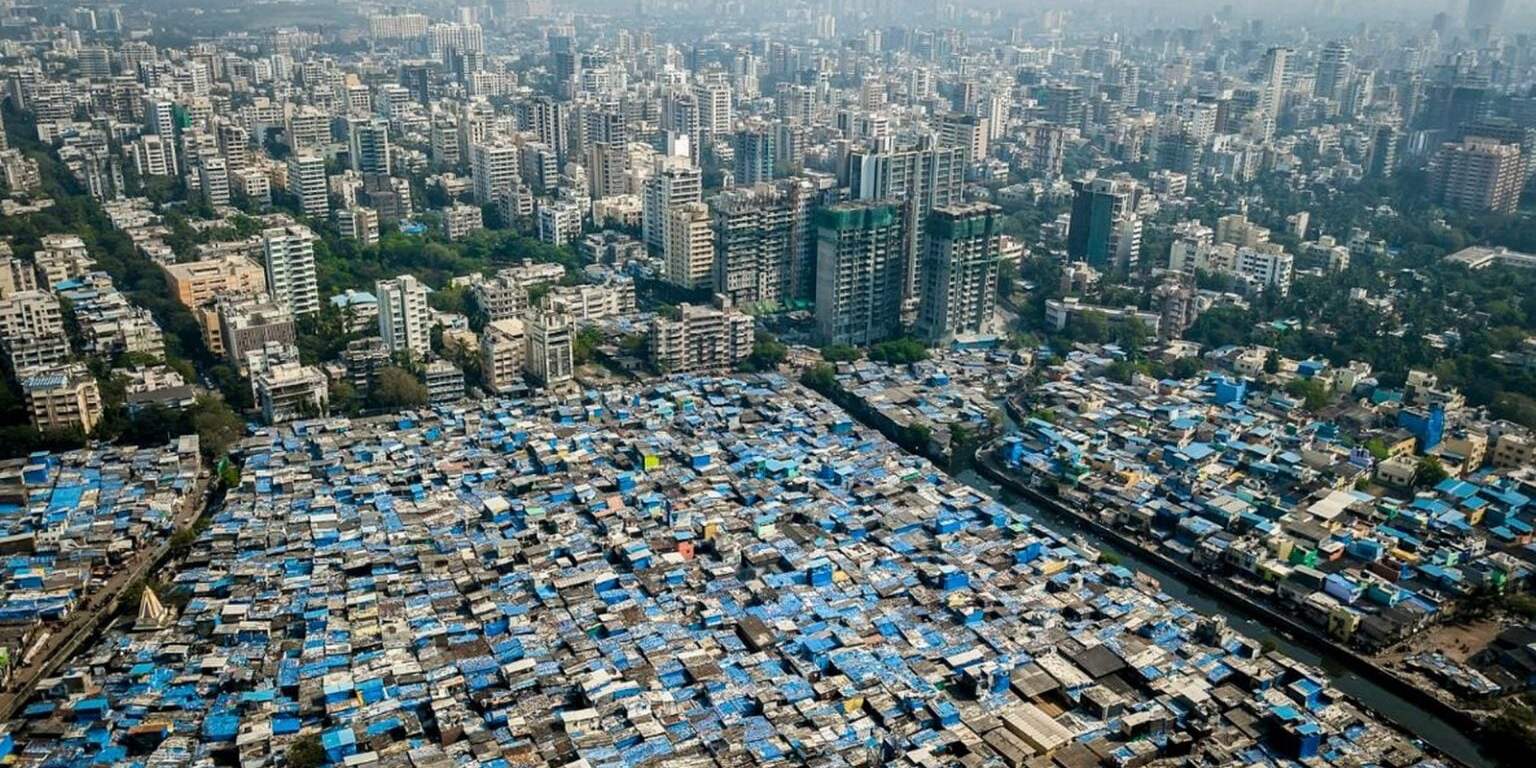
Contrary to this, India’s urban development model has subjugated cities to be a vessel for economic activity and global financial flows where urban displaced populations have become the collateral. In this piece, I examine how the colonial and economic underpinnings of development impact the legal actorhood of Indian cities in international law. Further, I explore an expansive role for cities at the global stage through transnational city networks (TCNs) that work on migration governance to bypass the nation-state’s development paradigm.
Cities as Local to Glocal Legal Actors
In the age of the ‘New Urban Agenda’, cities around the world have become the locus of cooperation and diplomacy on issues of sustainable development, migration, trade, human rights, and climate resilience, among others. This has created an expanding body of scholarship on cities and international law that delivers sub-fields such as “climate networks”, “human rights cities”, “frontier cities”, “sanctuary cities” and “international local government law”. Human rights cities, for instance, enable cities to address local socio-economic challenges through inclusive policies grounded in human rights principles for their diverse urban populations – including refugees and undocumented migrants – especially when nation-states have failed to do so. This involves, for example, enabling alternate forms of inclusion at the local level such as access to local identity documents and driving licenses, or considering undocumented persons under in-state tuition fee categories.
In practice, the interventions of local governments can be categorised into three types: forging vertical or horizontal alliances with other cities, international organisations and civil society, translating abstract norms into values and indicators at the local level, and introducing innovative practices to achieve social justice at the local level. When it comes to alliances, TCNs have emerged as the infrastructure on which local authorities could rely to deliver on various urban challenges. C40 Cities, Eurocities, Cities Alliance, Mayors Migration Mechanism, and ICLEI are examples of some popular city networks. Cities, therefore, have devolved into sites of rights protection and vernacularisation of human rights, where social mobilisations take place and principles of international law are routinely invoked by local authorities. In this process, cities have attained the status of international “legal actors”, with many scholars even arguing for the legal personality of cities in international law.
Most of the above-mentioned literature is, however, north-centric, and cannot be used to draw parallels to the Indian cities, as such a systematic study of its cities is not yet done. While there is no consolidated body of scholarship on cities and international law or human rights cities in India, the literature on housing rights, right to the city, urban citizenship, slum evictions, water and sanitation rights, etc., constantly invoke constitutional guarantees and international human rights frameworks and can be brought under this field. Moreover, Indian cities are also studied as hotbeds of alternate claims of the subaltern and the vernacularisation of human rights. Albeit, migrant rights and welfare are regarded as a national and state policy concern in India, although it warrants rights-based interventions of Urban local bodies (ULBs). Any subversive implementation of rights by ULBs is also understudied. Therefore, ULBs in India are not involved to the same extent as their northern counterparts at the local and global stage in human rights and social justice issues, particularly that of migrant protection and integration – although migration is the cornerstone of urbanisation and urban growth.
‘Global’ Cities and the Urban Development Conundrum
Nijman refers to the rise of the “global city” as first the rise of the global private city, which is constituted by the interactions of the economic sector, before the rise of the global public city, where the local bodies gain global reach through discharging their administrative functions. In the Indian scenario, the global public city takes the form of a passive entity instrumentalised by finance. This is also demonstrated by how most Indian cities centre their participation in international networks and forums such as C40 cities, ICLEI, UCLG, etc., on economically bounded and infrastructure-led aspects of climate and sustainability, instead of more people-centred and rights-based agendas. I argue that this approach is influenced by how the notion of development is construed by the nation-state – causing a rift and misdivide between the economic and legal systems – which eventually deprioritises migrants.
Urban governance in India is top-down, influenced by state policies expressed through economic considerations of “progress, modernisation, growth and development”. This approach led to the neoliberal IFI-driven policies of the 1980s and 1990s. These policies relied on market forces and focused on world-class infrastructure projects, overlooking the needs of the urban poor. This is visible in the slum “development” policies that focus on the eradication of slums by displacing slum dwellers for beautification of the city and the construction of the ‘global city’. The right to development based on the UN Declaration, in such contexts is argued to adopt a utilitarian form in juridification by going against its very fabric, when courts invoke it for the larger public interest violating human rights. Such a shift was further complemented by the rise in privatisation of public services, reliance on Public-Private-Partnerships (“PPPs”), outsourcing of basic functions such as street cleaning, garbage collection, etc., to the private sector, and contractualisation of municipal jobs.
This urban development model is a result of weak decentralisation, enabled by the morphology of India’s ULBs. Unlike most countries, ULBs in India are a creation of the Constitution. The 12th Schedule of the Constitution brings several key social justice functions, including urban planning, poverty alleviation, slum improvement, planning for economic and social development, safeguarding interests of weaker sections, etc., under the ambit of the ULBs. Instead of operationalising these powers, states created various parastatal agencies, including authorities and public corporations that report to state governments to discharge these public duties. Such parastatal bodies are mostly funded by IFIs, enabling easy access to international borrowings and municipal bonds by bypassing local accountability. These parastatal agencies implement large-scale housing, infrastructural and construction projects, which even the Supreme Court, in Bondu Ramaswamy v Bangalore Development Authority & Ors, interpreted as enabling “development”. Simultaneously, municipal bodies are stripped of all powers – due to lack of funding, state governments’ reluctance to devolve power, non-mandatory phrasing of these provisions, and the continuity of administrative practices inherited from the colonial state. This tendency to separate one type of development from others instead of adopting a single holistic and people-centred understanding of development, essentialises it by prioritising a certain model.
Further, more recent urban initiatives such as the Smart City Mission and AMRUT are highly centralised and continue to also focus on physical infrastructure and revenue generation pathways of development, deepening existing social inequalities. ULBs under this model of development are irregularly tied with international financial and legal regimes that discipline and subordinate them based on assessments of “creditworthiness” for borrowings. According to Eslava, global south cities have what he refers to as ‘borderline’ international legal personality, as they are only conditionally included in the legal and financial systems that replicate existing patterns of extraction, dependency and control across the post-colonial divide. This is in line with the argument of limited legal actorhood of Indian cities, revealing how the development discourse that impacts the role of cities has its roots in the asymmetrical systems of power, capital and law that also shape how global south cities appear in international law.
Therefore, although the nation-state is committed to building ‘global’ cities in India, their global reach is solely dependent and constrained by the objectives of capital and finance. In the next and final section, by pushing the limits of the legal actorhood of Indian cities through migration-related TCNs, I propose the possibility of affording better inclusion to migrant populations and reorienting urban international law to the legal and colonial histories of global south cities.
Advancing Legal Actorhood through Migration-Based TCNs
The interconnectedness between the concept of sustainable development, migration and localised efforts is explicitly made out in the Global Compact for Migration (GCM), Global Compact for Refugees (GCR) and the SDG Agenda. This became the push for cities looking for pragmatic, rights-based or moral solutions to “team up” with other cities and civil society organisations to tackle urban challenges. This occurs through ‘horizontally aligned’ networks like Cities of Migration, where cities as main constituents collaborate with NGOs and international organisations; as well as ‘vertically aligned’ networks such as Mayors Mechanism (led by UCLG, IOM and Mayors Migration Council) for multilateral partnership and advocacy between cities and national governments for funding and migration policy alignment. Such participation could take the form of “decoupling”, where the cities go implicitly or explicitly against the national laws, or not, to welcome migrants, create humanitarian corridors, or enable their social integration. These interactions could lead to shaming their national governments, influencing narratives or agenda setting, translating global norms to local contexts, as well as developing standards themselves.
Like the rest of the scholarship on urban international law, the majority of the literature on migration networks is also north-centric, with weak contributions from the global south in general, and Asia-Pacific, specifically. India’s participation in migration-related TNCs is sparse. There is no evidence of formal local pledges or contributions of significance on migration. India has still not joined the ‘Call to Local Action’ pledge of the GCM, while countries such as Nepal, Bangladesh, Pakistan and the Philippines have over the years. In this backdrop, African cities are generating an alternative model that can be imbued by global south cities that are rapidly urbanising while struggling with weak decentralisation, lack of national policies and adequate data. By acknowledging their role in responding to migration on the ground, these cities assume their glocal positions and claim agency through their network engagements, as they promote glocal objectives and demonstrate political will for taking action. Such a claimed actorhood later translates into the ability to co-shape narratives on migration, facilitating partnerships with international organisations at the international and local levels, and championing knowledge sharing and access to funding through corporate actors and philanthropies.
In contextualising the African example to the Indian cities, new strategies could emerge to expand the global reach of similarly situated ULBs and position themselves as legal actors with active claims, contributions and objectives. First, shifting focus to state-led urban models could be a pathway for divergence from national development-centric urban and migration policies. For instance, Kerala, which has historically cultivated stronger ULBs, released India’s first urban policy in 2025. The policy envisions a one-of-a-kind comprehensive rehabilitation plan for its ‘guest’ workers, ensuring their inclusion and social equity. Moreover, the language adopted in the policy, which specifically states moving from “growth-centric” to “human-centred” urban development, challenges existing dominant framings. Such policies are an ideal entry point to TCN engagements that could strengthen narrative building and norm creation of Indian cities at the global level, triggering improved local efforts through partnerships and funding opportunities. Second, considering the increasing politicisation of migration, the intersection of climate and migration/mobility presents itself as another window to work on migration as an ancillary to climate risks while bypassing national and state resistance, which is currently not explored in the Indian cities context. Overall, arguing for Indian cities’ participation in migration governance at the global level and the expansion of its legal actorhood is not only a call to strengthen glocal interventions, but also a reimagination of the notion of development to accommodate the well-being of all urban residents for creating sustainable urban futures.
Conclusion
India’s urban model constantly constructs cities as “engines of growth”, thereby making them a financial apparatus of the nation-state, hollowing them out of any agency. This results in cities becoming sites of displacement, instead of a locus of well-being, care, inclusion and protection of all its inhabitants. Therefore, the development discourse, reeling from the asymmetrical systems of power, capital and laws, impacts the role of global south cities in international law, limiting Indian cities’ legalhood at the global stage to financialised interactions. In this context, I present the exercise of transnational agency of Indian cities through TCNs as an alternate mechanism to consciously shape narratives, set agendas and claim agency at the global level to circumvent the national migration-development paradox while disrupting long-standing hierarchies and north-centric power structures of international norm-creation. An expanded legal actorhood would also allow cities to merge various fields, reduce fragmentation and promote area-based approaches of development by catering to all intersecting categories of urban displaced populations – such as urban poor, migrants, refugees, homeless, slum dwellers, etc. – in an urban setting. This would eventually enrich mainstream international law. However, I remain aware that such disruption may not amount to complete reorientation of the field and does not come without further implementation challenges. Moreover, cities need to factor in and be cautious of the continued entanglements of migration governance with burdens of colonial power asymmetries and financial subordination in all their engagements.
Gauri Thampi is a human rights lawyer, development professional, and an incoming PhD candidate in the International Law Department at the Geneva Graduate Institute (IHEID). Her research interests lie in the intersection of urban citizenship, displacement and global south cities in international law. Gauri obtained a Master’s in International and Development Studies, specialising in Migration, from the Geneva Graduate Institute (IHEID) in 2025. Her professional experience spans research, advocacy and policy work with NGOs and international organisations based in Geneva and abroad, including Nationality for All, Grand Bargain Secretariat (hosted by the Norwegian Refugee Council), Border Forensics, and the Geneva Centre for Security Sector Governance (DCAF). Prior to this, she has contributed to legal system-reform efforts, provided direct assistance, and led access-to-justice projects for migrants and refugees focusing on labour rights and gender justice at the Margins to Access Project (MAP), New Delhi.
Picture Credit: Johnny Miller/ unequalscenes.com

